A small deposit, a big change in habit.
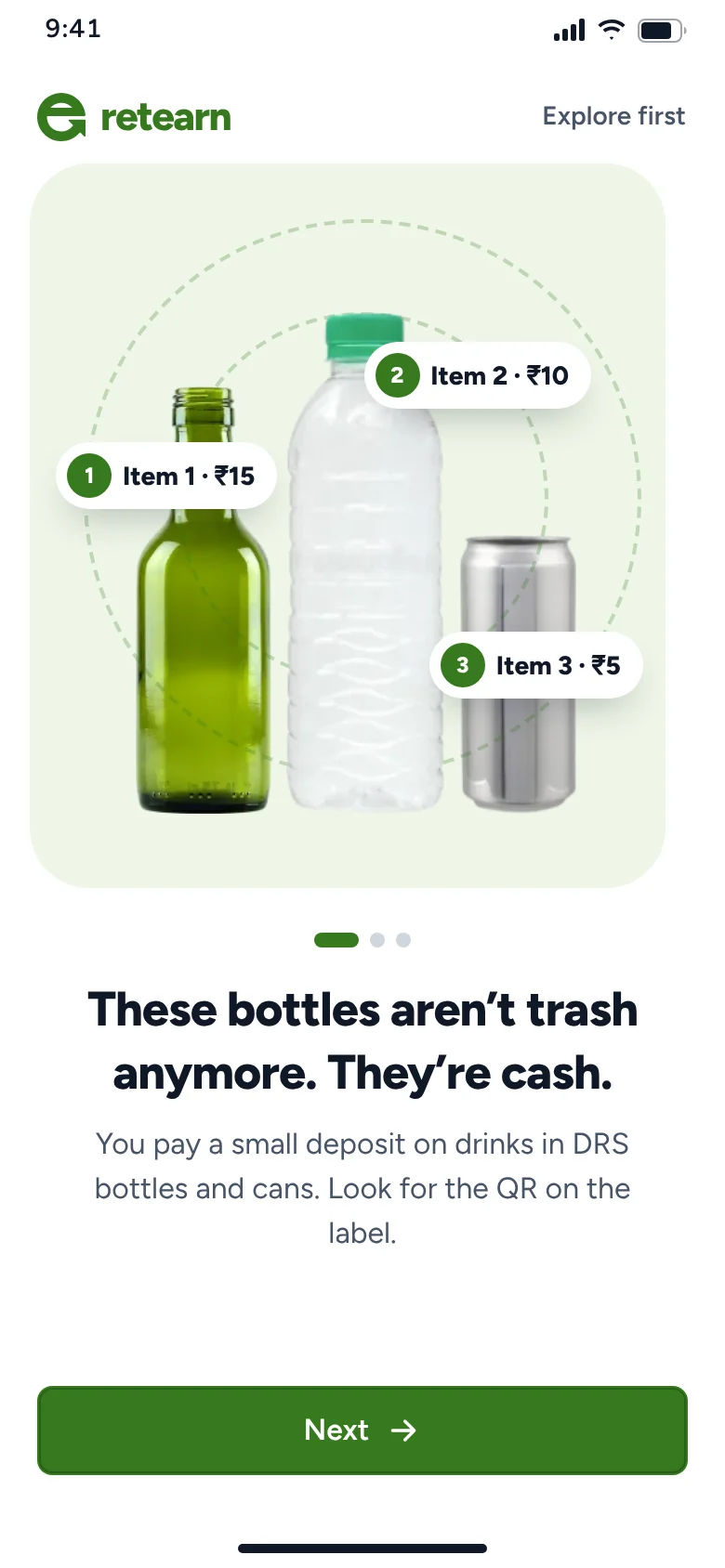
Under DRS every drink sold carries a refundable deposit of ₹5 to ₹15, printed on a QR label. Bring the empty back and the money is yours again. The scheme only works if getting that money back is easier than throwing the bottle away. That is the consumer app's whole job.
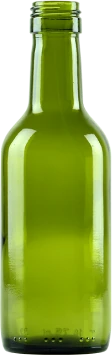
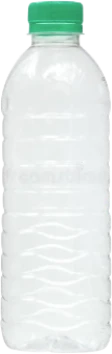
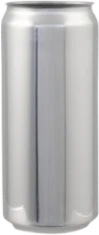
Buy a drink, pay a deposit
The deposit sits inside the price, marked by a DRS QR on the label.
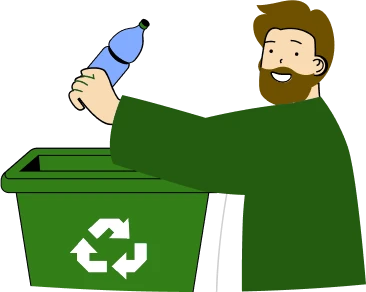
Bring the empty back
At a machine, to a collection agent, or picked up from your door for big batches.

Deposit back on UPI
The refund lands in seconds. The bottle goes to a recycler, not a landfill.
People wanted their money back. Nothing made it easy.
On the Kedarnath pilot and the first city rollouts, we watched people at machines and counters and asked why bottles still ended up in bins. The answers were rarely about not caring. They were about not knowing, not finding and not trusting.
How might we make returning a bottle feel like collecting money, not doing a chore?
Two people, very different piles of bottles.
Anjali Singh, 29Lives in Panaji · returns a few bottles a week“If it takes longer than buying the drink, I will just throw it away.”
 Santosh Naik, 46Runs a beach café · 300+ bottles a week
“I have crates of empties. I cannot carry them to a machine every day.”
Four rules we checked every screen against.
Money first
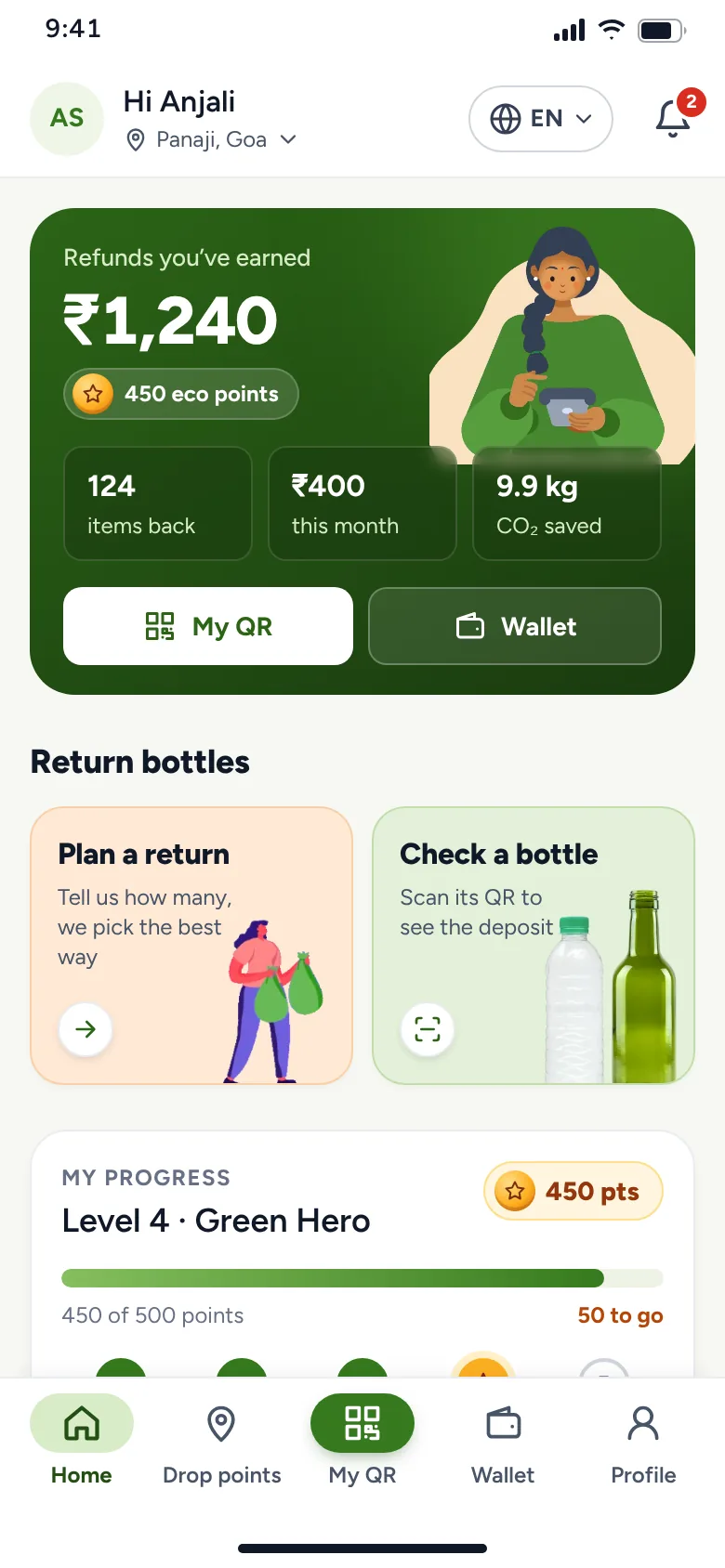
The deposit is the motivation, so it is always the biggest number on screen.
Refund card leads HomeOne tap to the nearest way back
Never make someone search. Suggest the right place for how many they have.
Plan a return picks for youShow before you pay
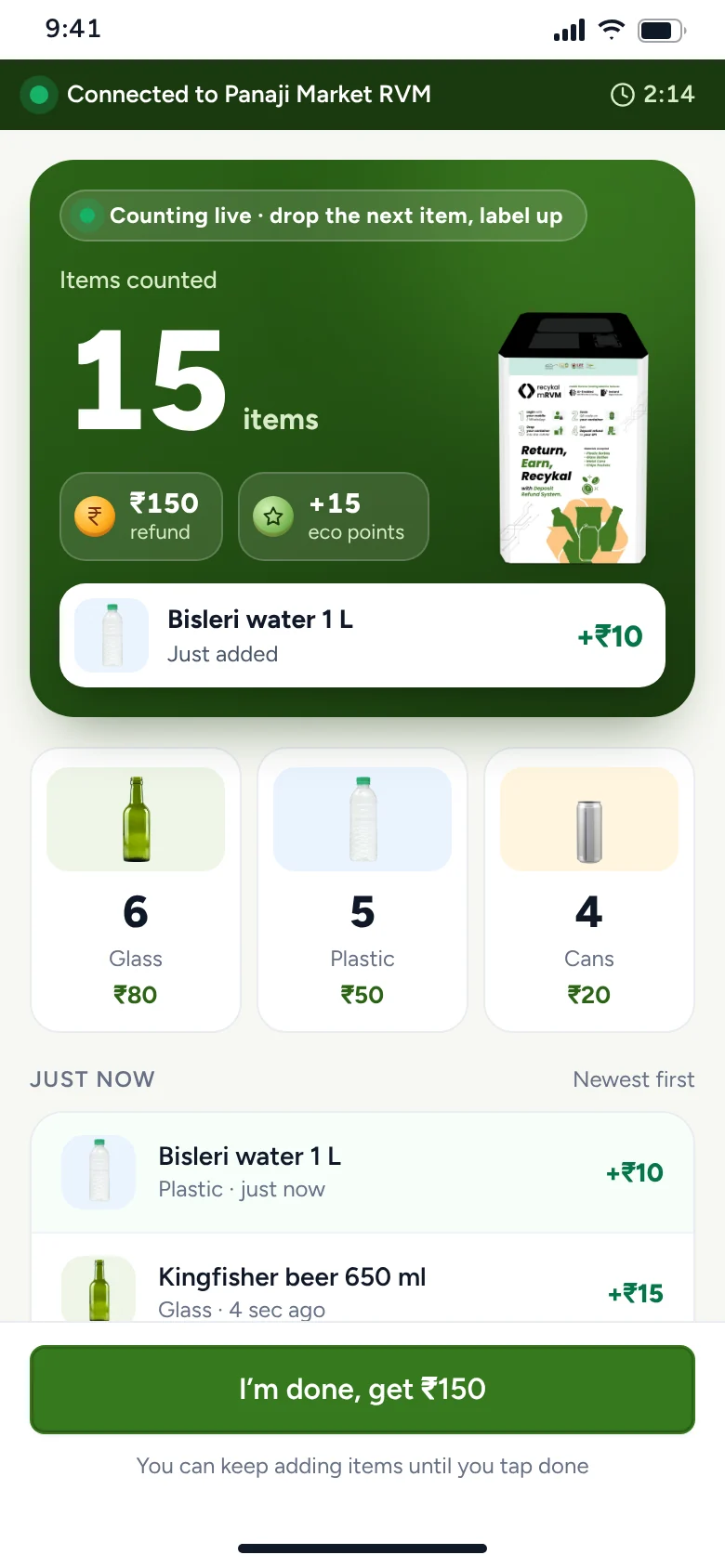
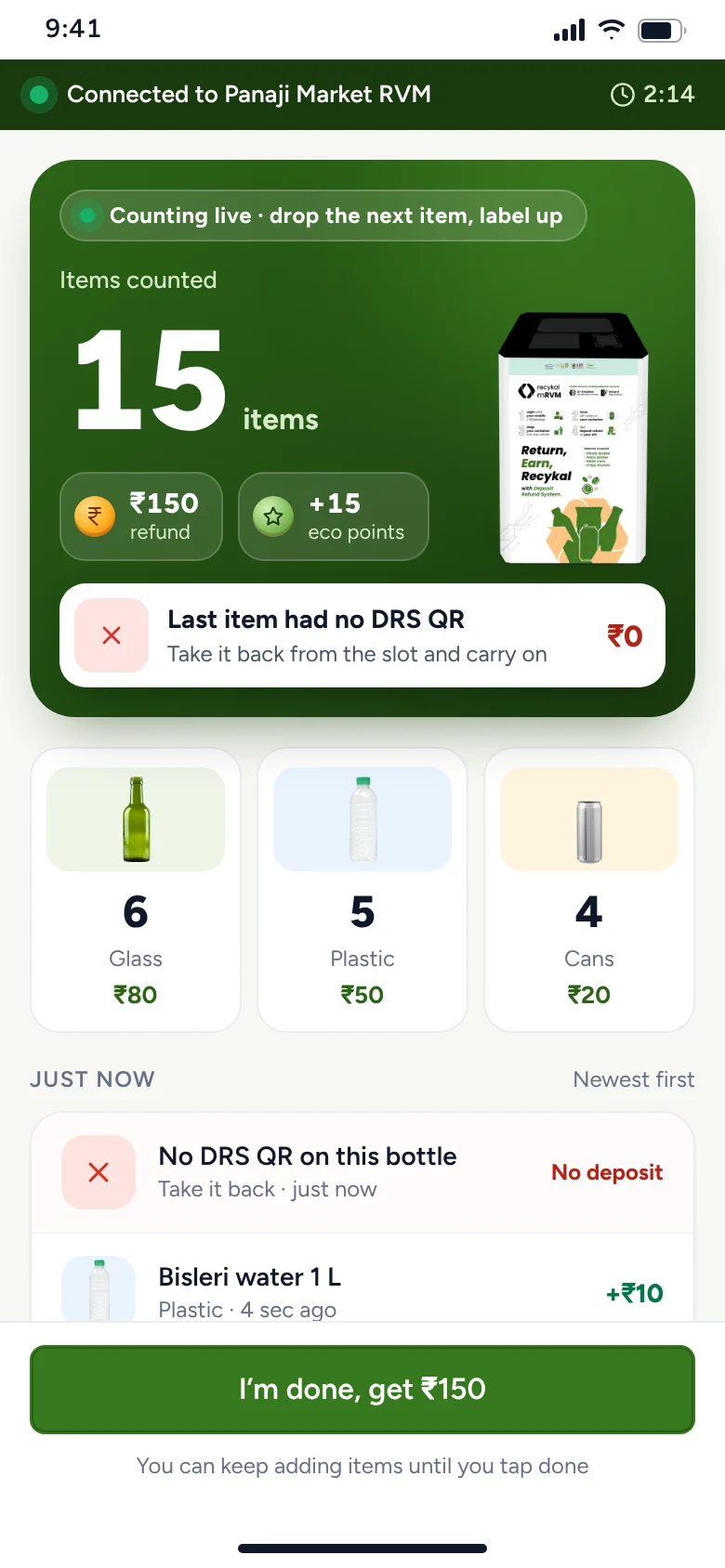
A live count and the maths per item, so nobody has to trust blindly.
Machine counting cardJoy, not guilt
Warm illustrations and rewards instead of lectures about waste.
Eco points and surprise rewardsThree ways back. The app picks the right one.
A pilgrim with three bottles, a family after a picnic and a café with a crate of empties need different things. Tell the app how many you have and it suggests the best way, then shows the nearest place to do it.
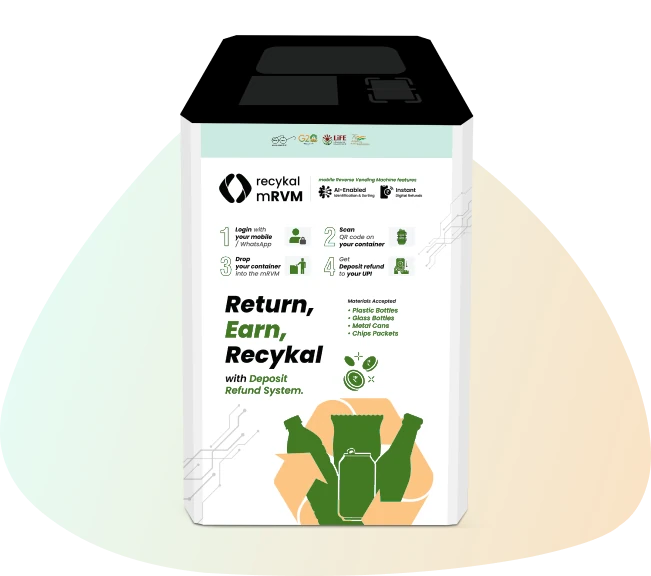
Use a machine
Show your QR, feed items one at a time, watch the count go up, get paid.
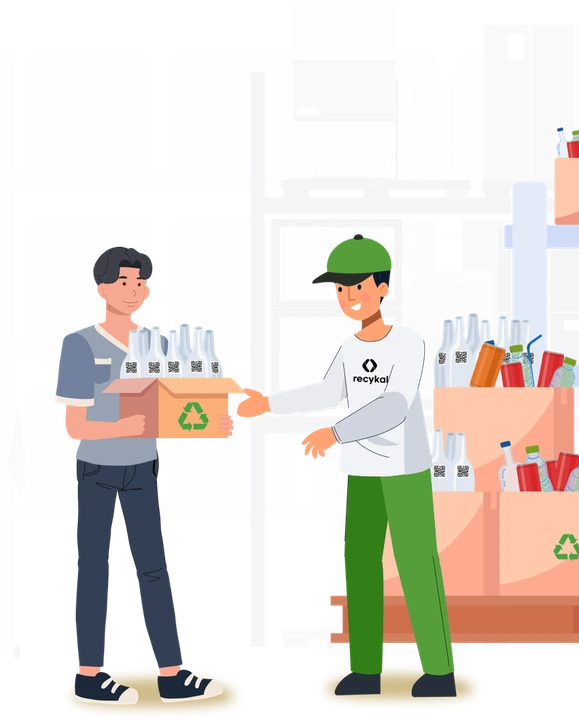
Hand it to an agent
A collection agent scans your QR and your bottles, then you check the count.
Book a pickup
Tell us how many, pick a time, a driver collects from your door.
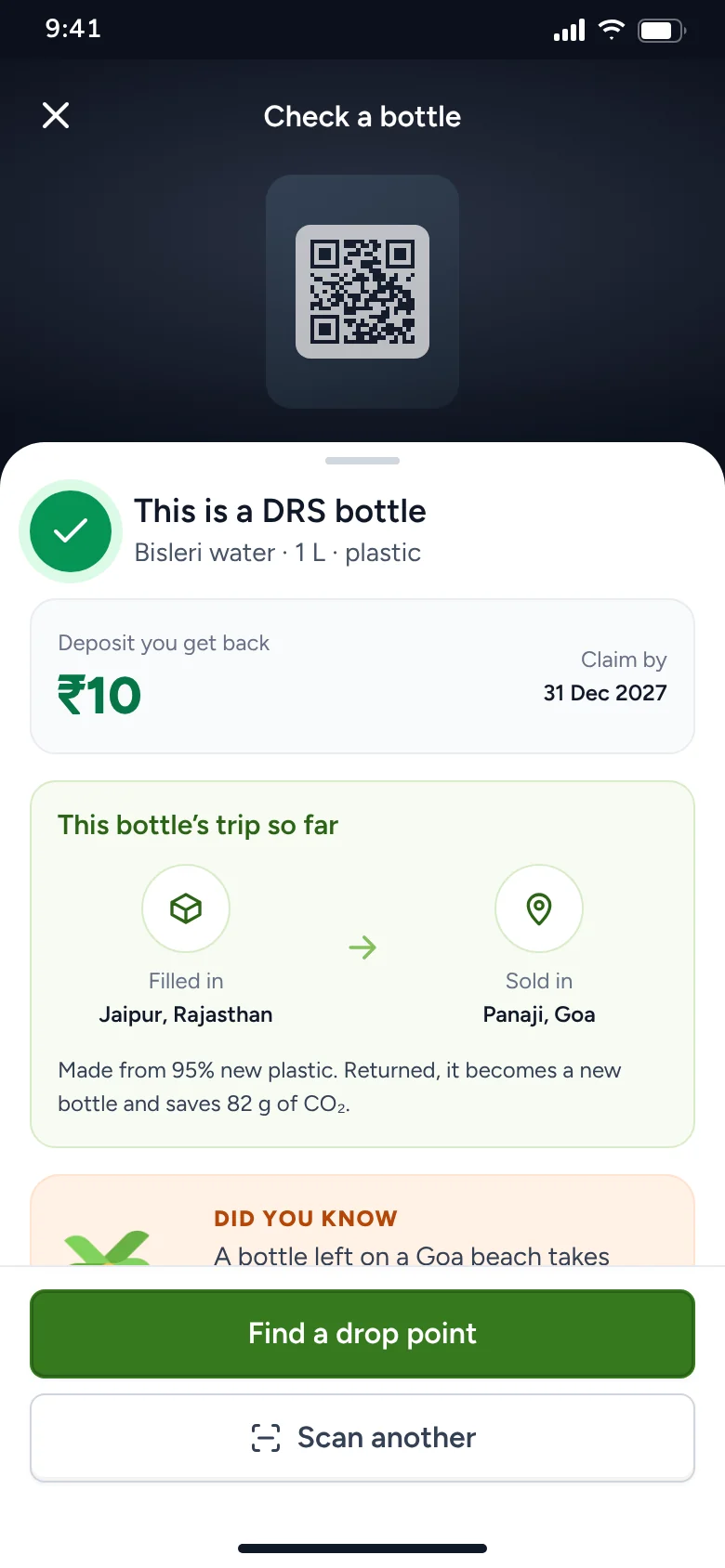
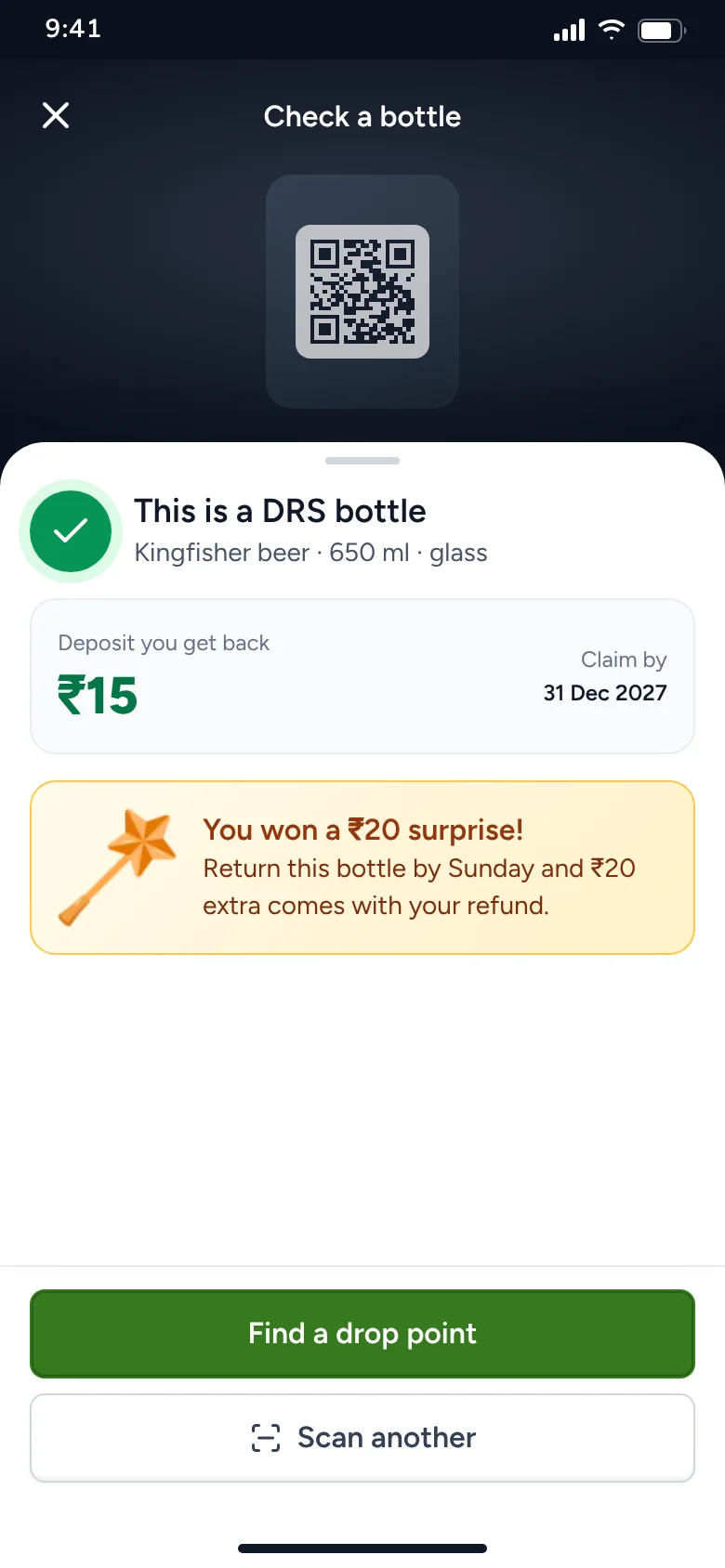
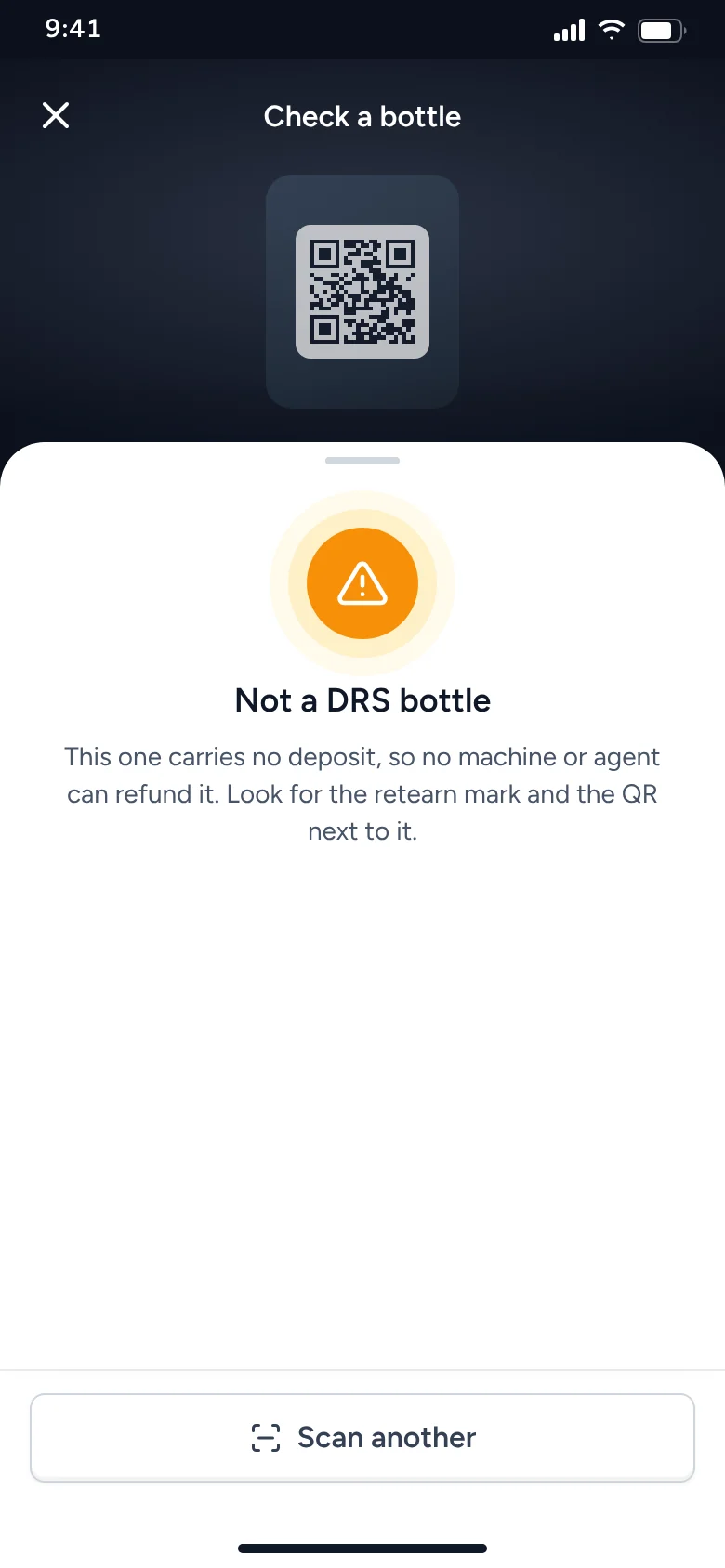
Plus one small tool people loved: Check a bottle. Scan any label to see its deposit, where it came from, and the occasional surprise reward.
Money first, then the way to get more.
The screen answers three questions in order: how much have I earned, where do I go, and how am I doing.
Seven journeys, shown screen by screen.
Every flow below is a real path through the shipped prototype, from the first open to the impact screen.
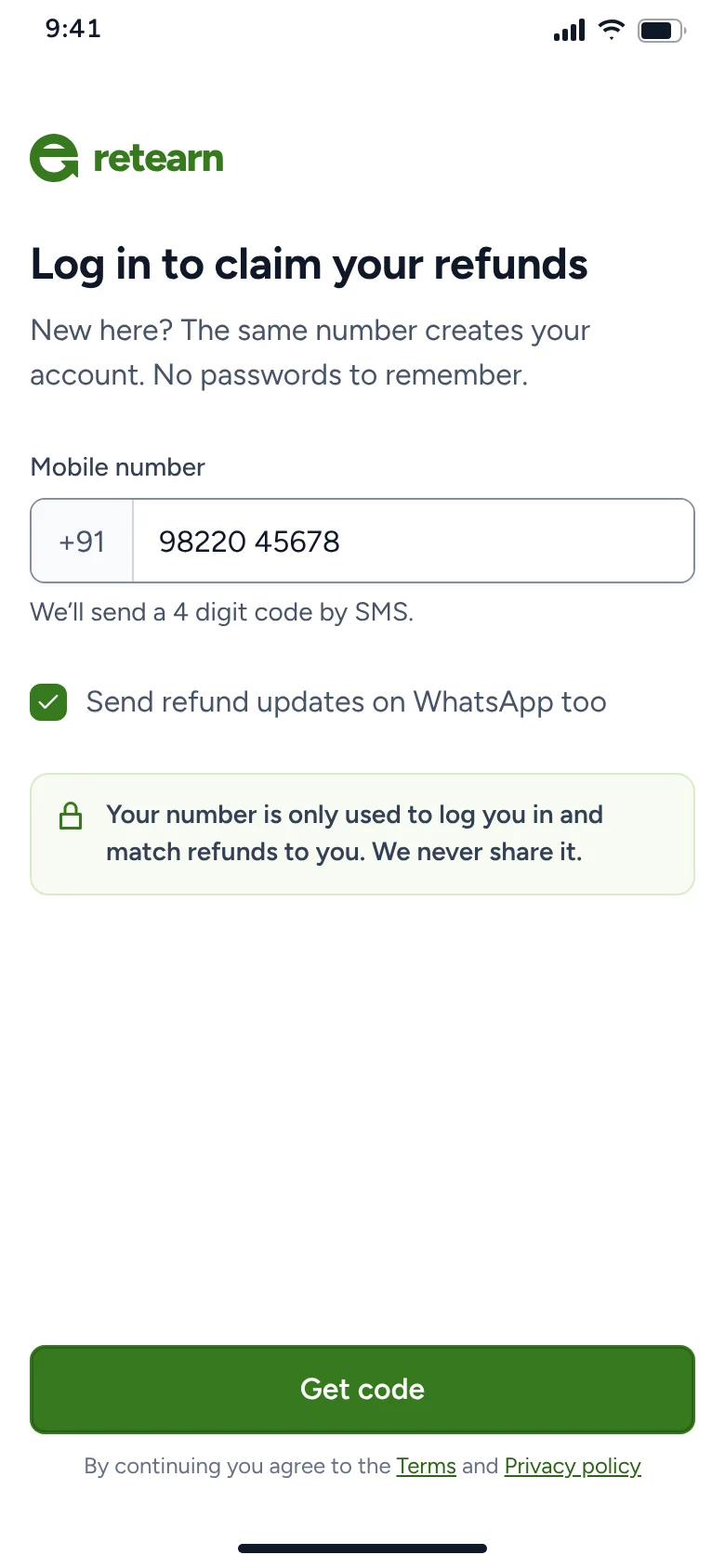
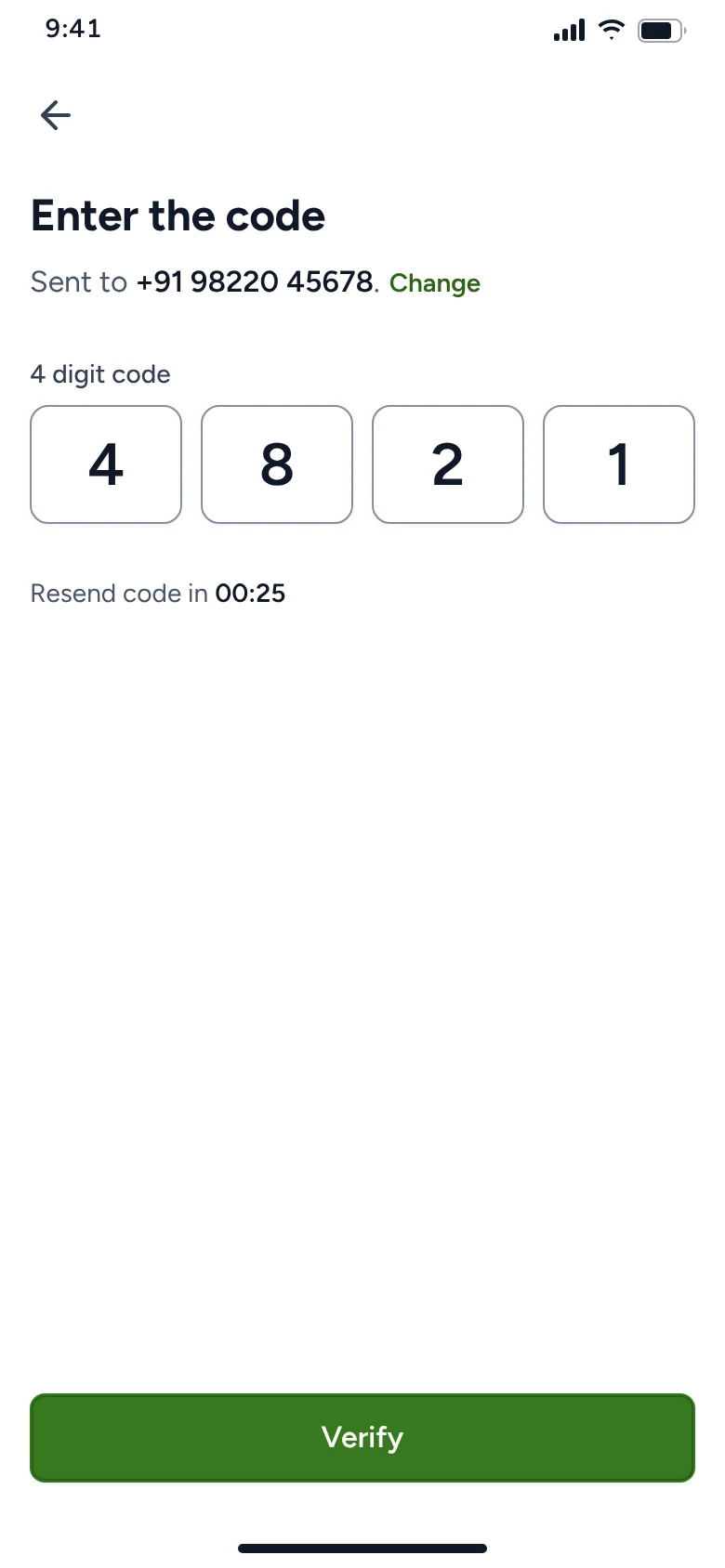
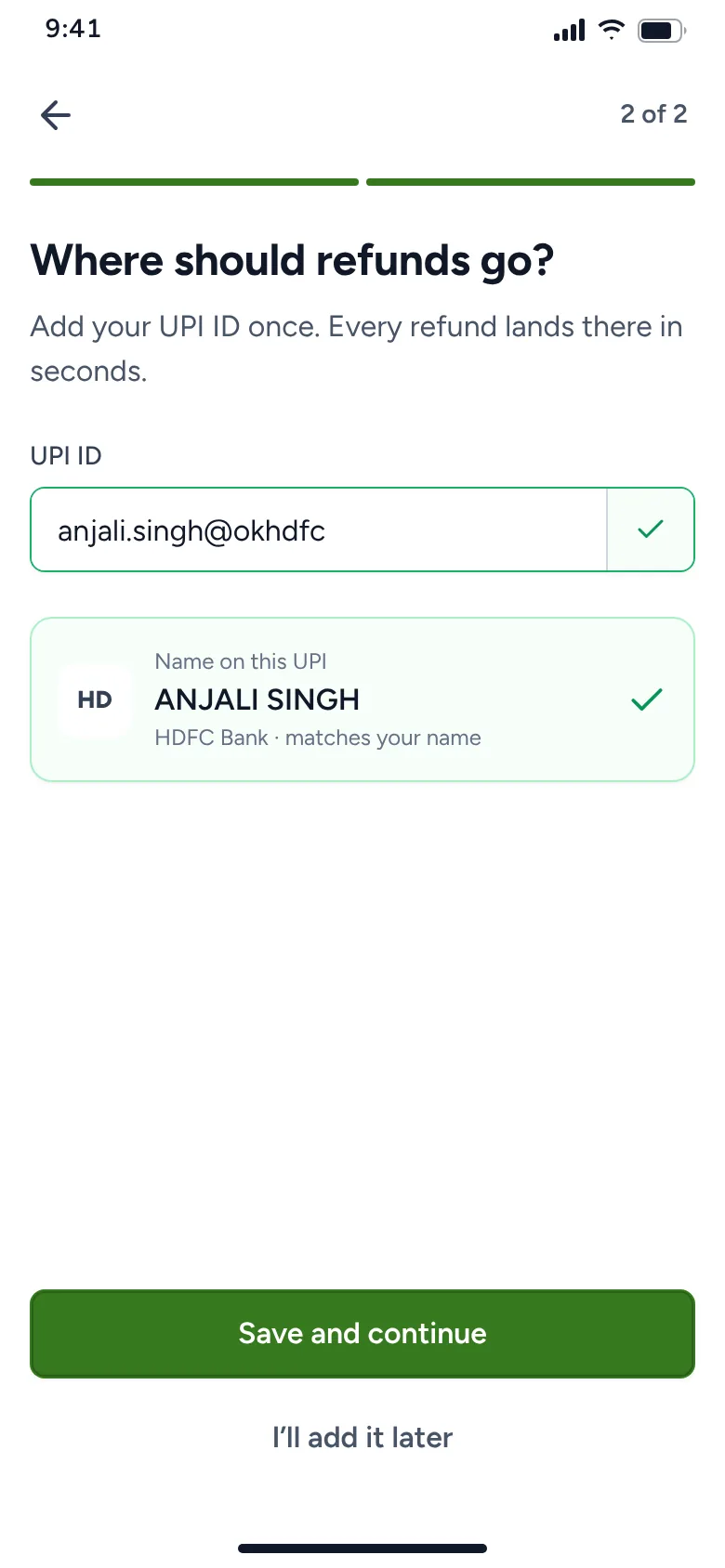
From curious to ready in under a minute.
Three illustrated slides explain the deposit, the ways back and the payout. Sign up is a mobile number, an OTP and a UPI ID, verified on the spot.

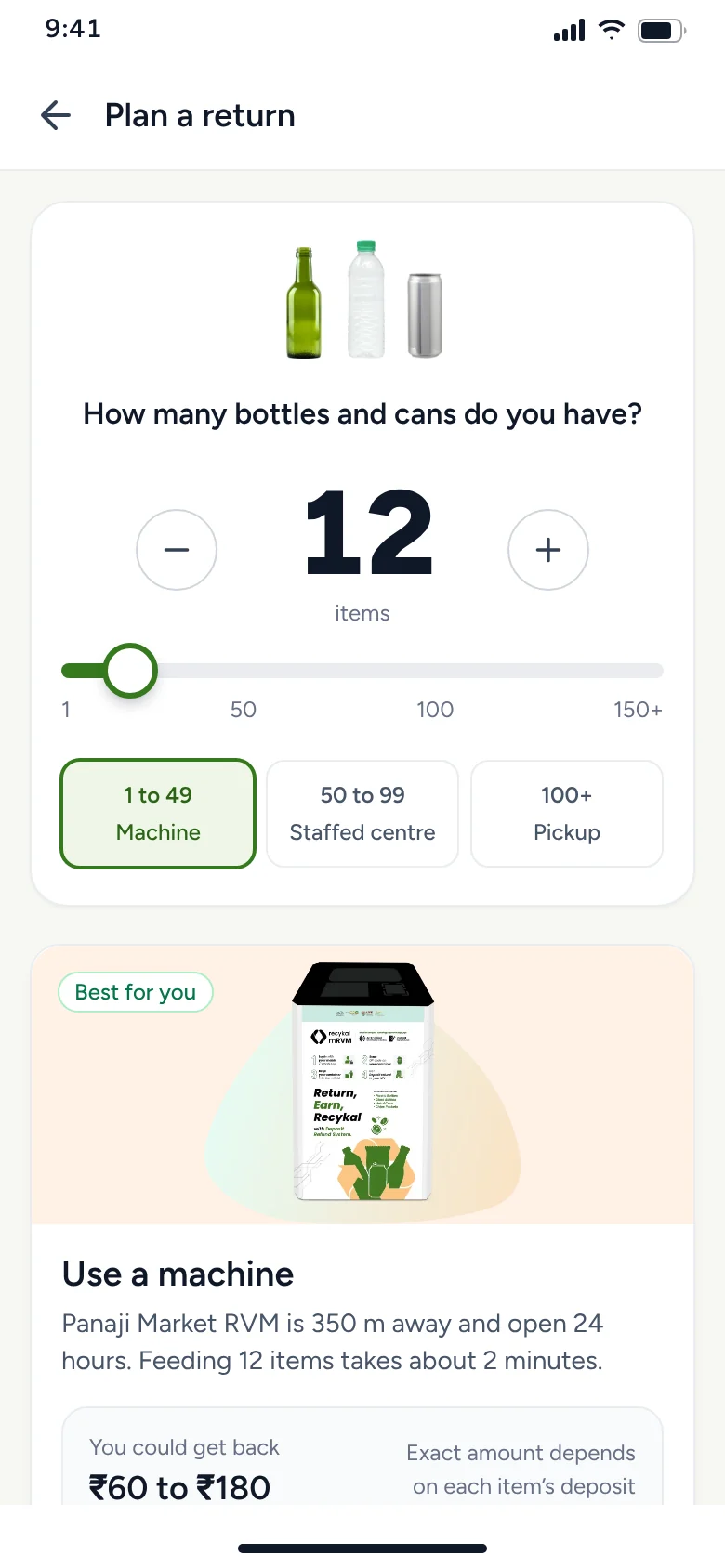
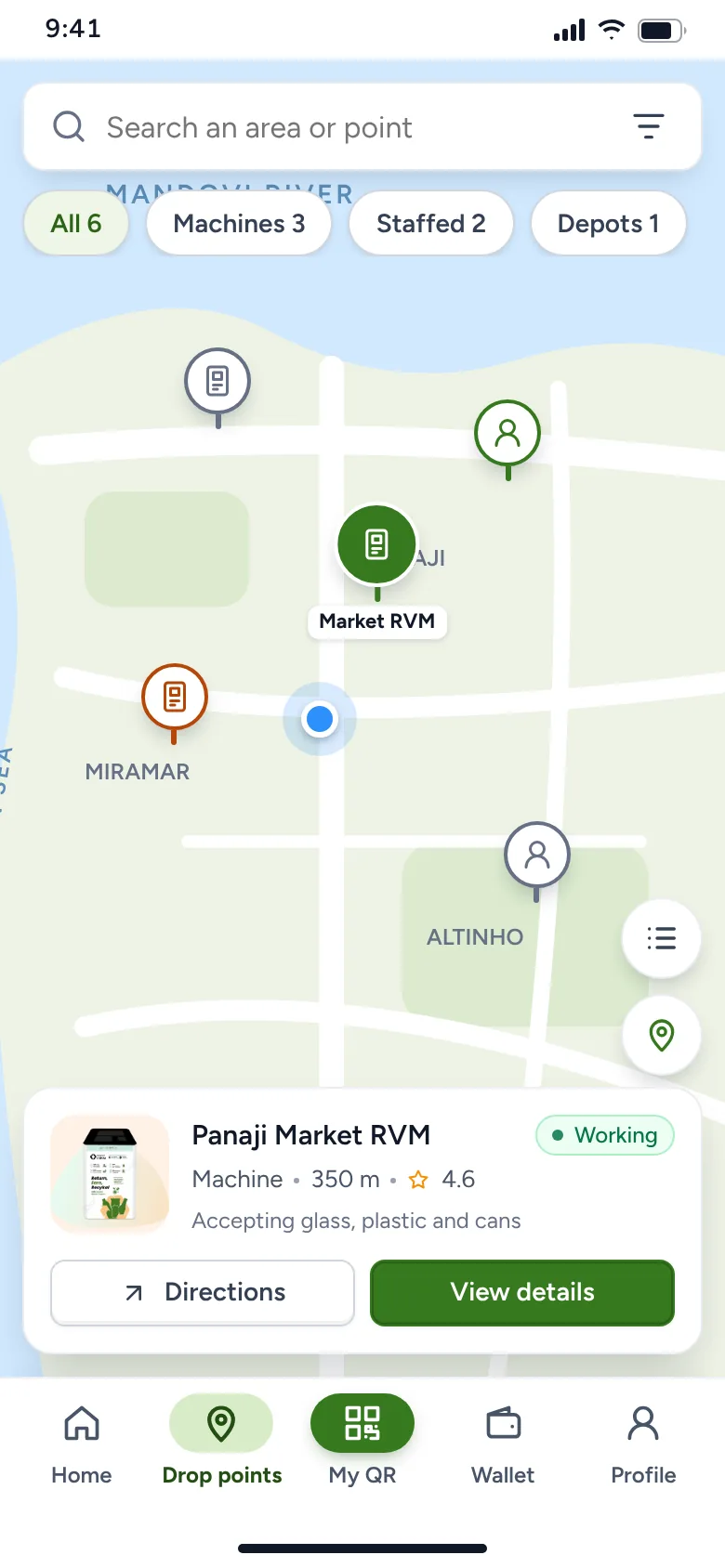
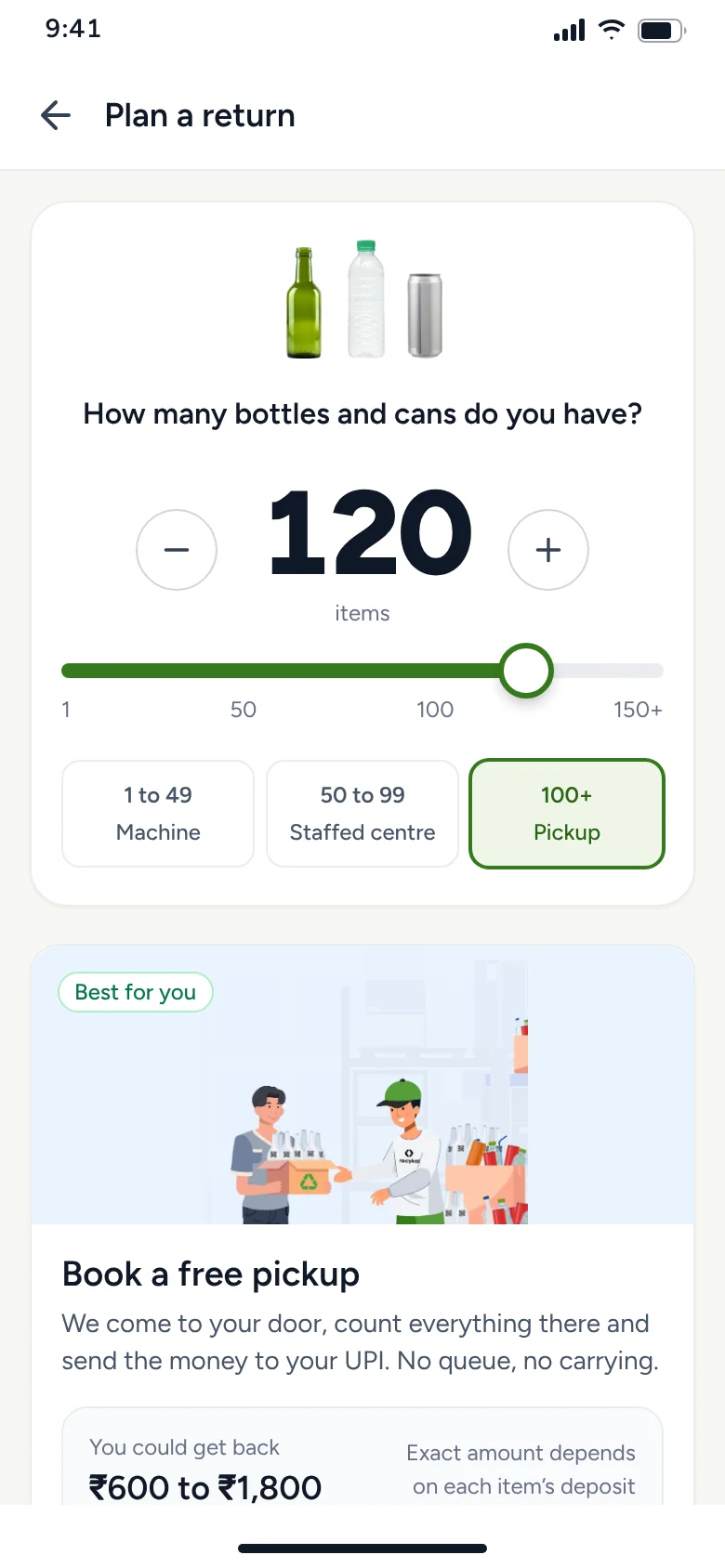
Tell us how many. We find the best way and place.
A slider for item count suggests a machine, a centre or a pickup. The map and list show live status, hours and distance for every point.
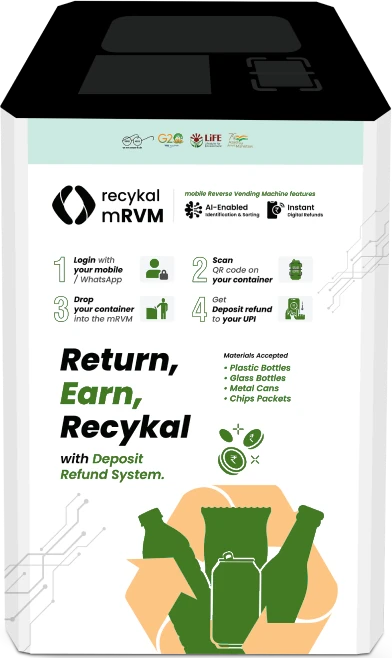
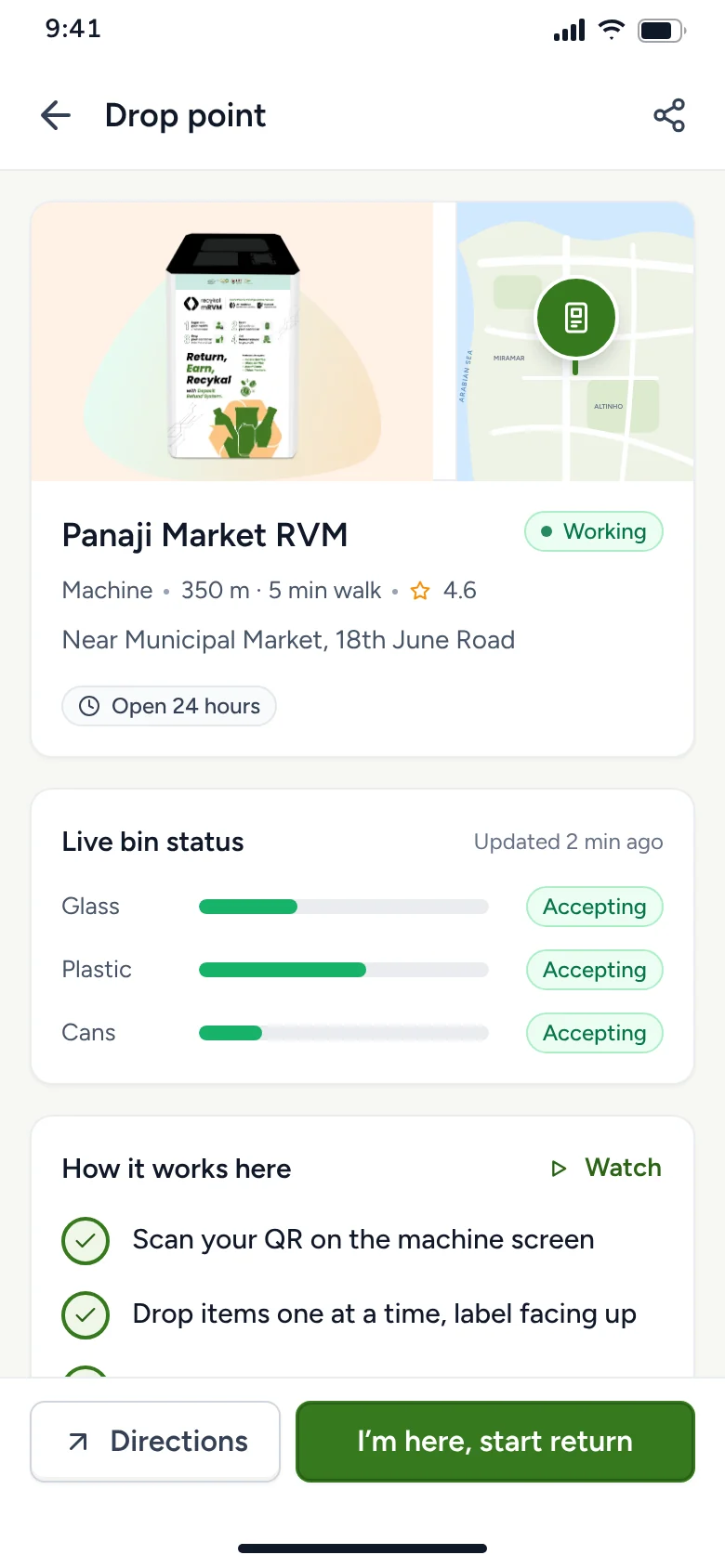
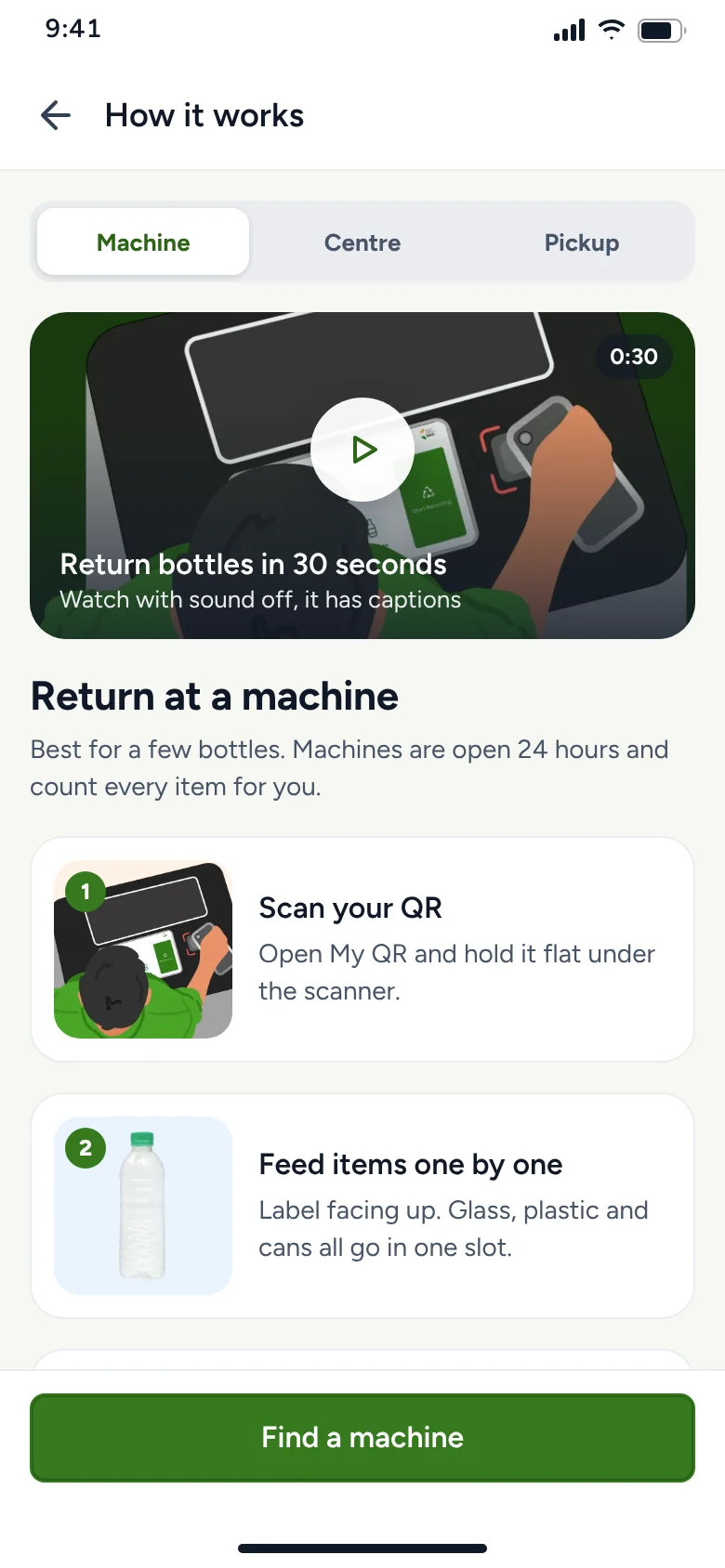
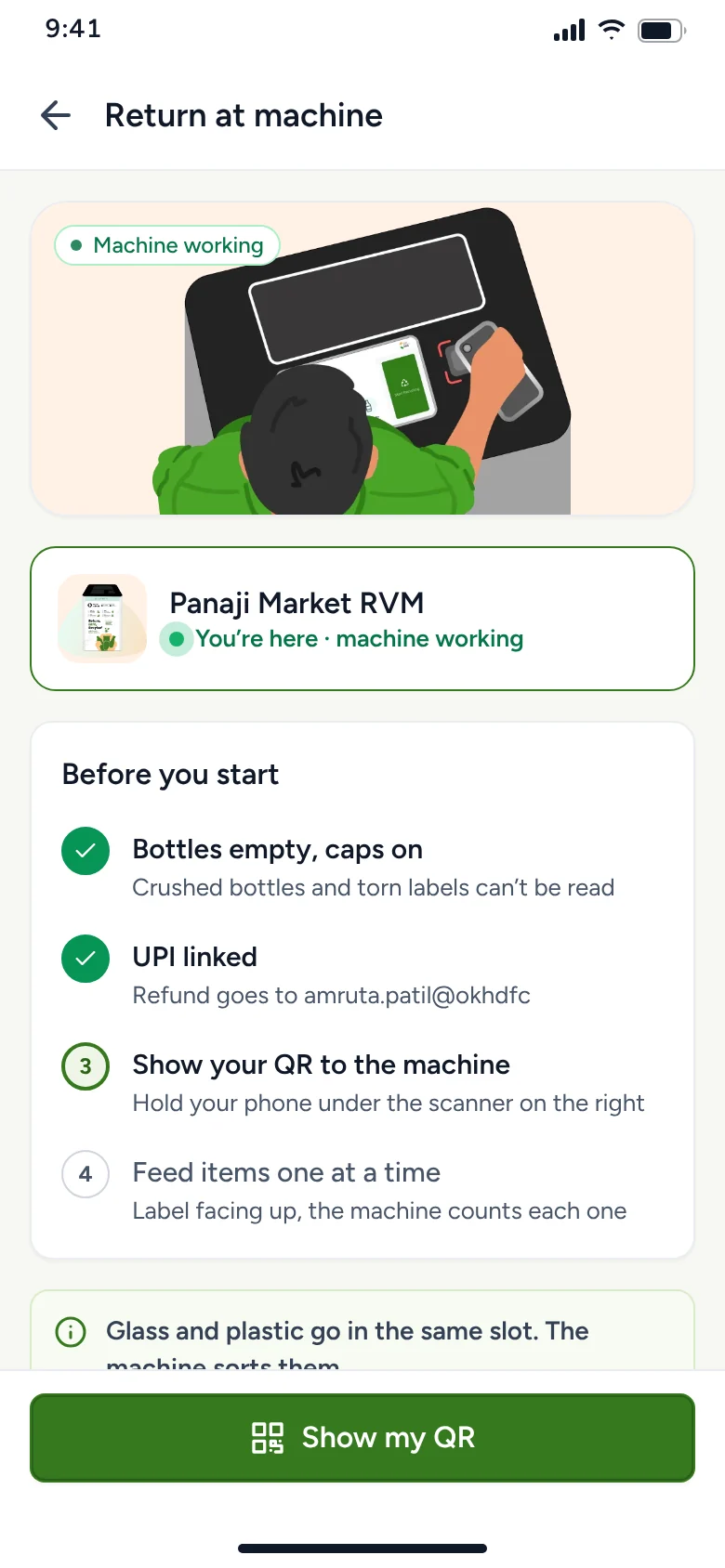
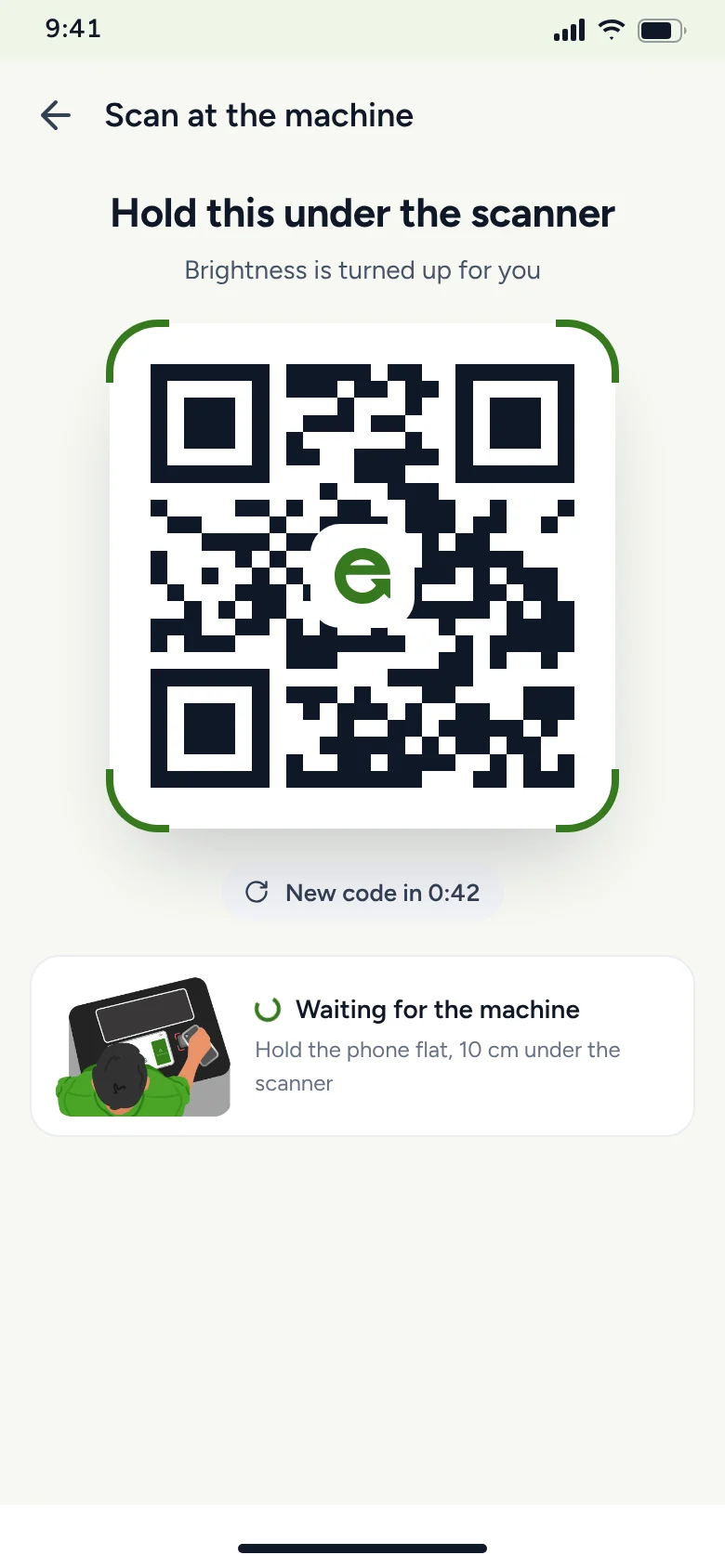
Return at a machine and watch the money climb.
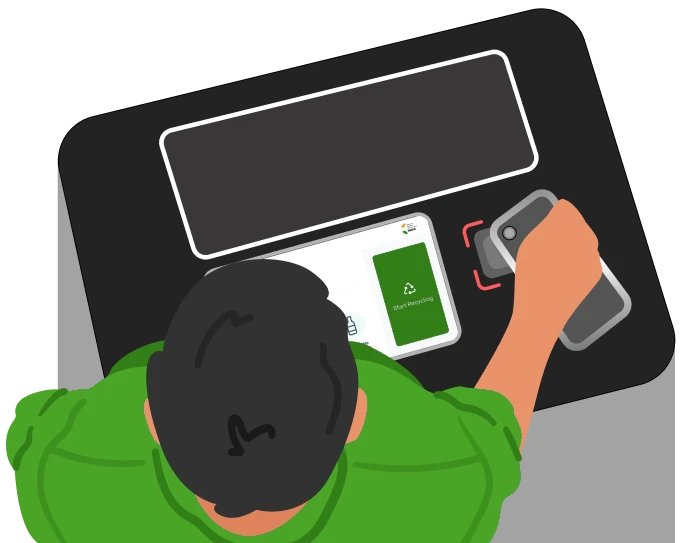
Show your QR to the scanner, feed items one by one and see each one counted live with its deposit. Finish and the refund is on UPI before you leave.
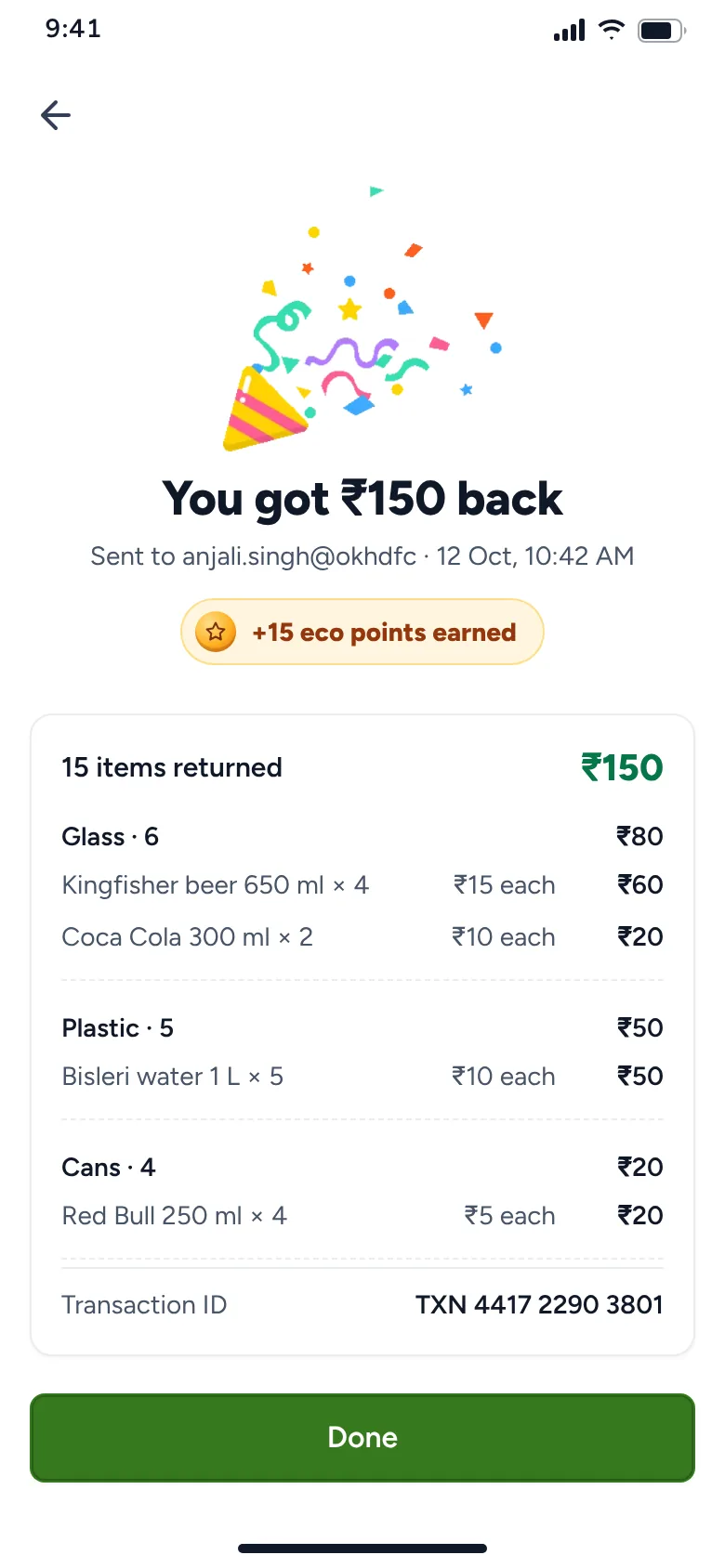
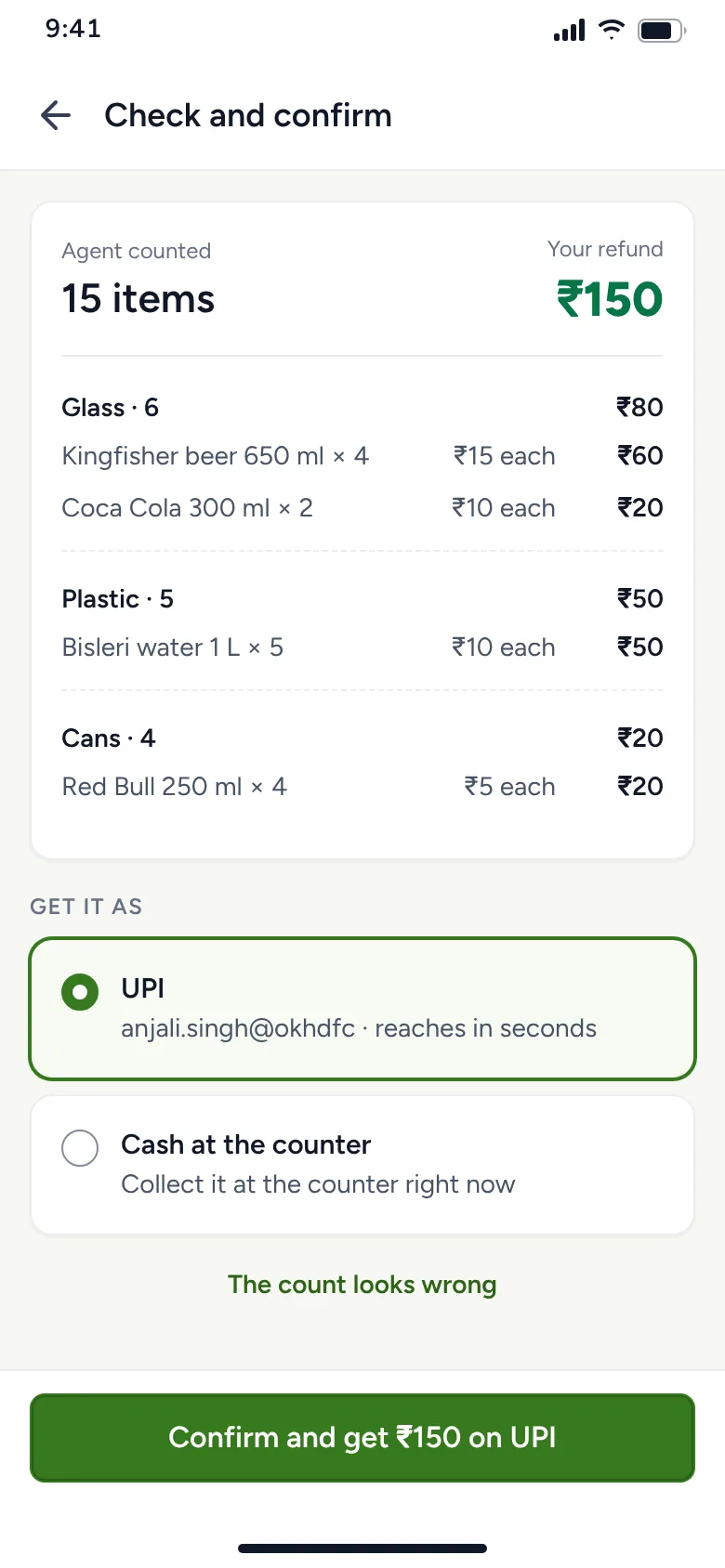
Hand it to a collection agent, check before you accept.
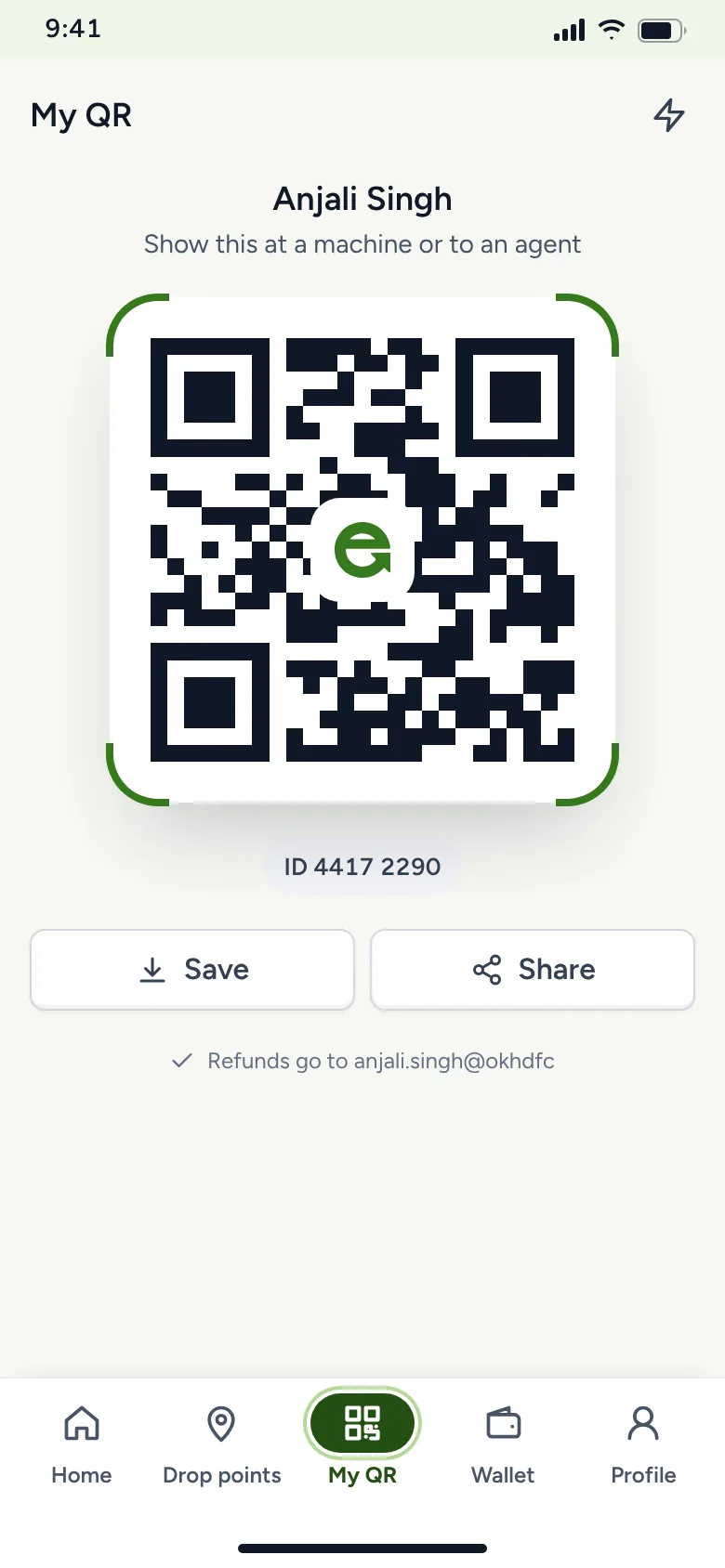
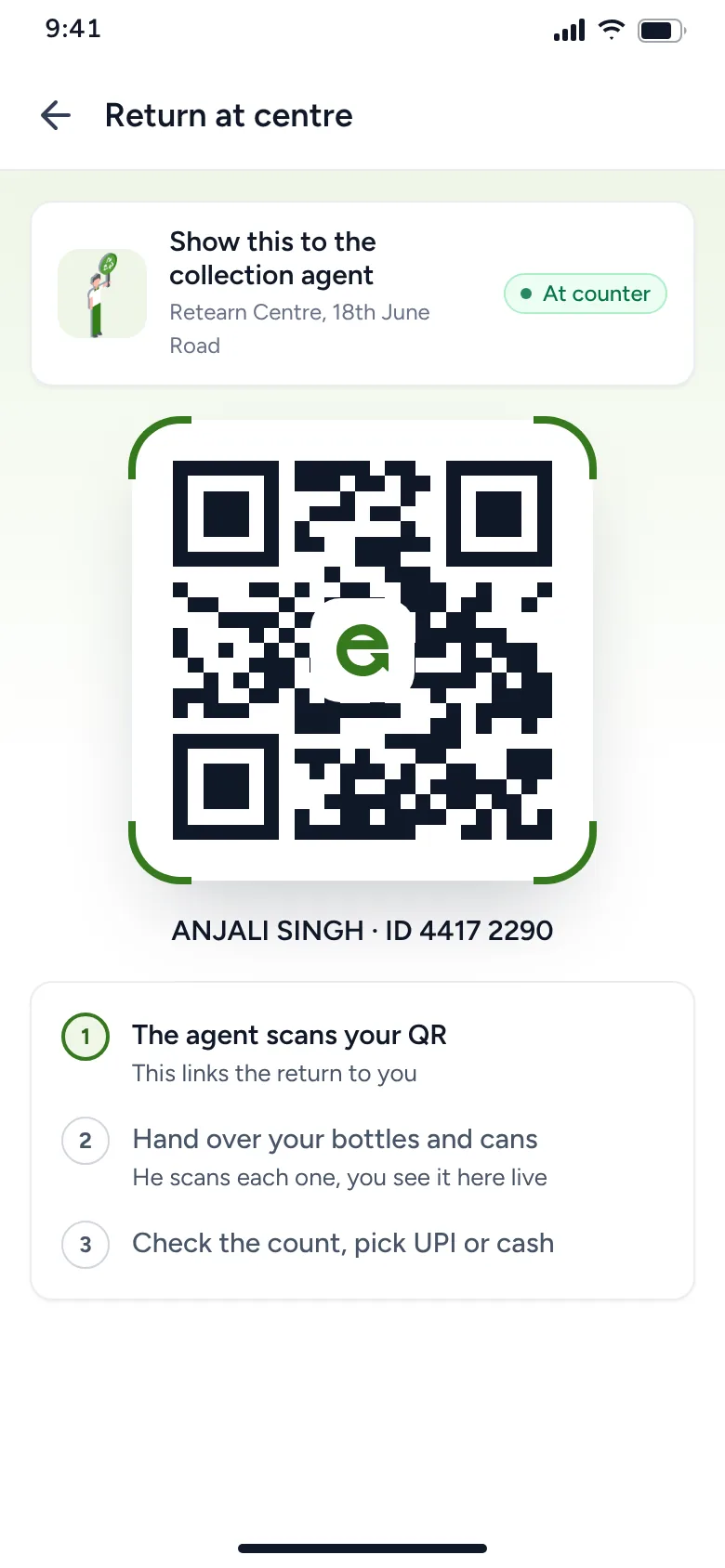
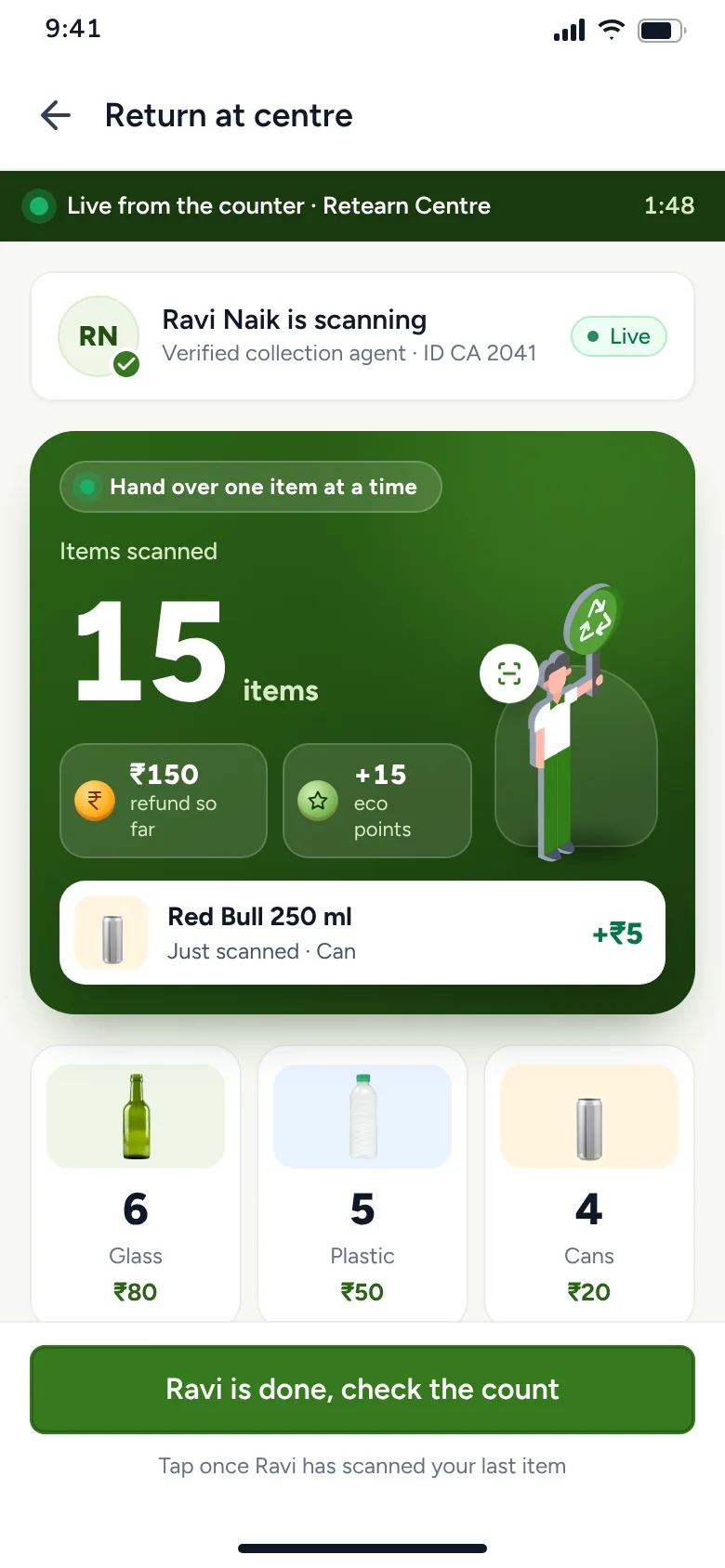
The agent scans your QR and your bottles on their own app. Yours shows the same count as it happens, and you confirm it before the refund is sent.
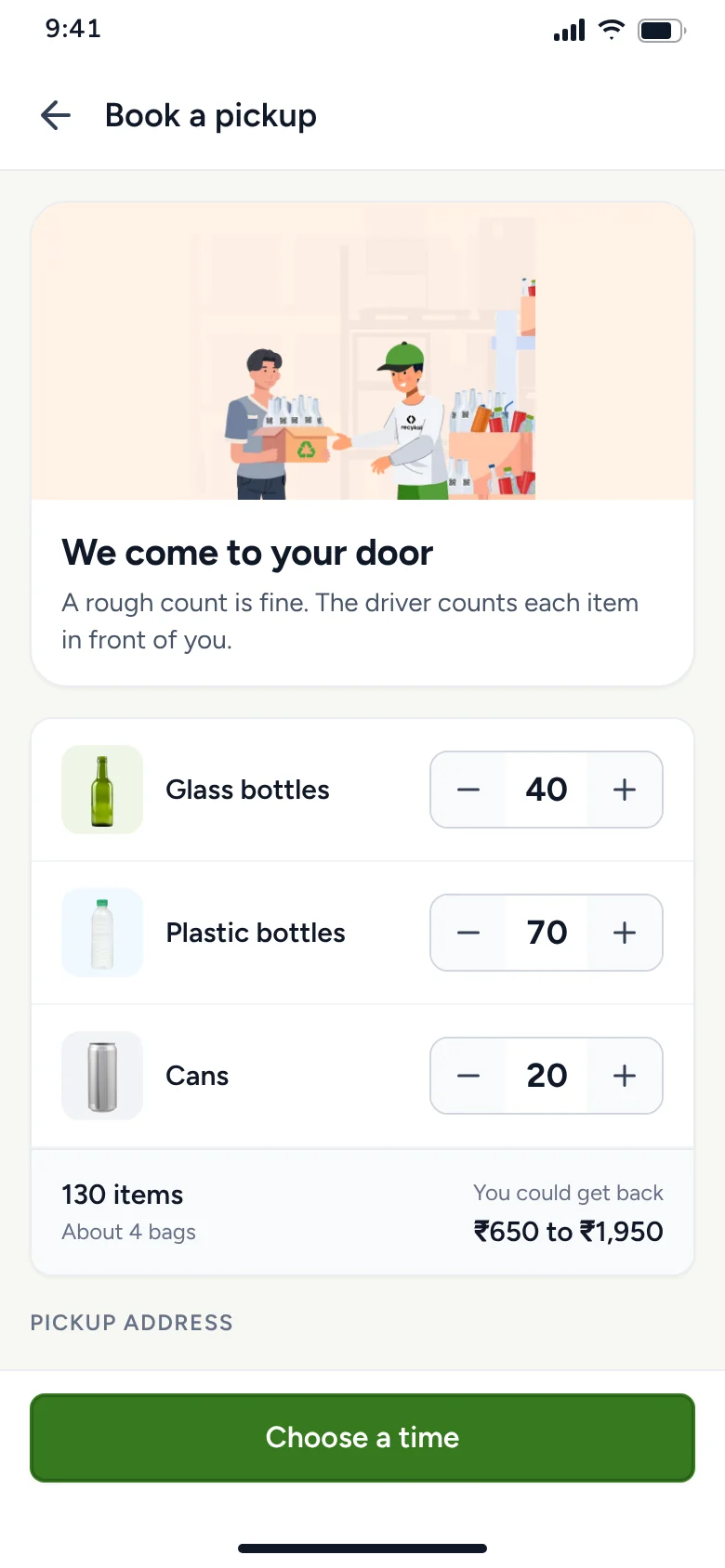
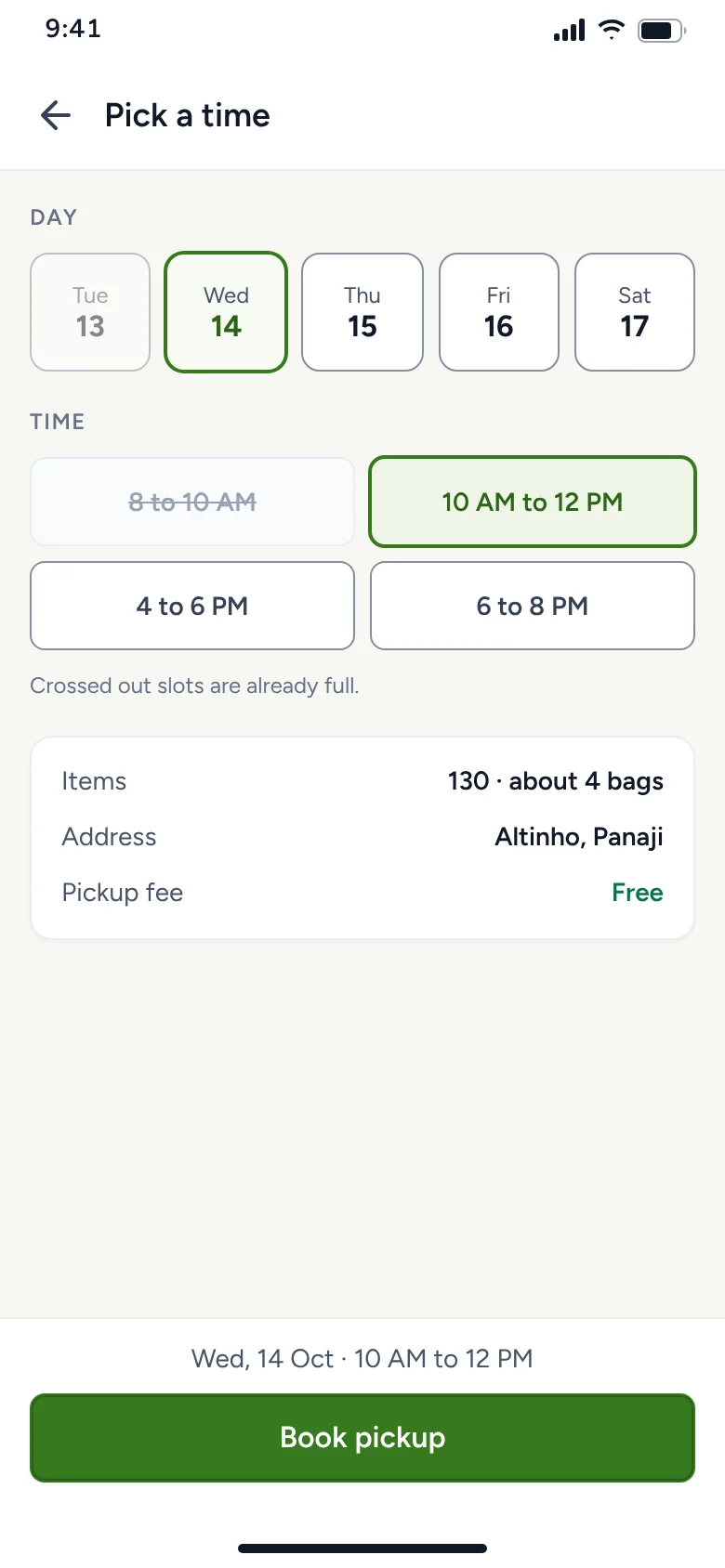
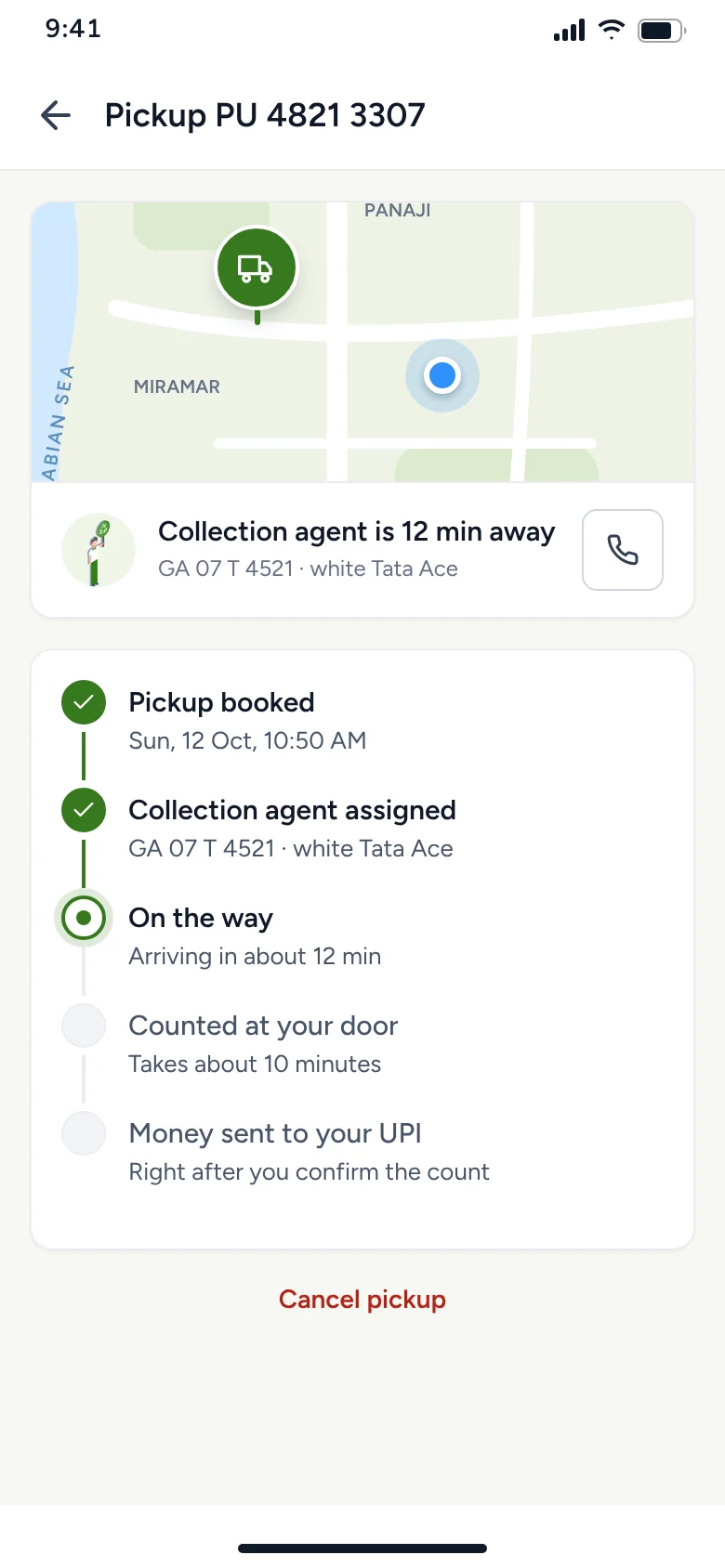
A pickup for the café, the hotel and the big family.
Above 100 items the app switches to a free doorstep pickup. Pick a slot, track the driver, get one payout after the count.
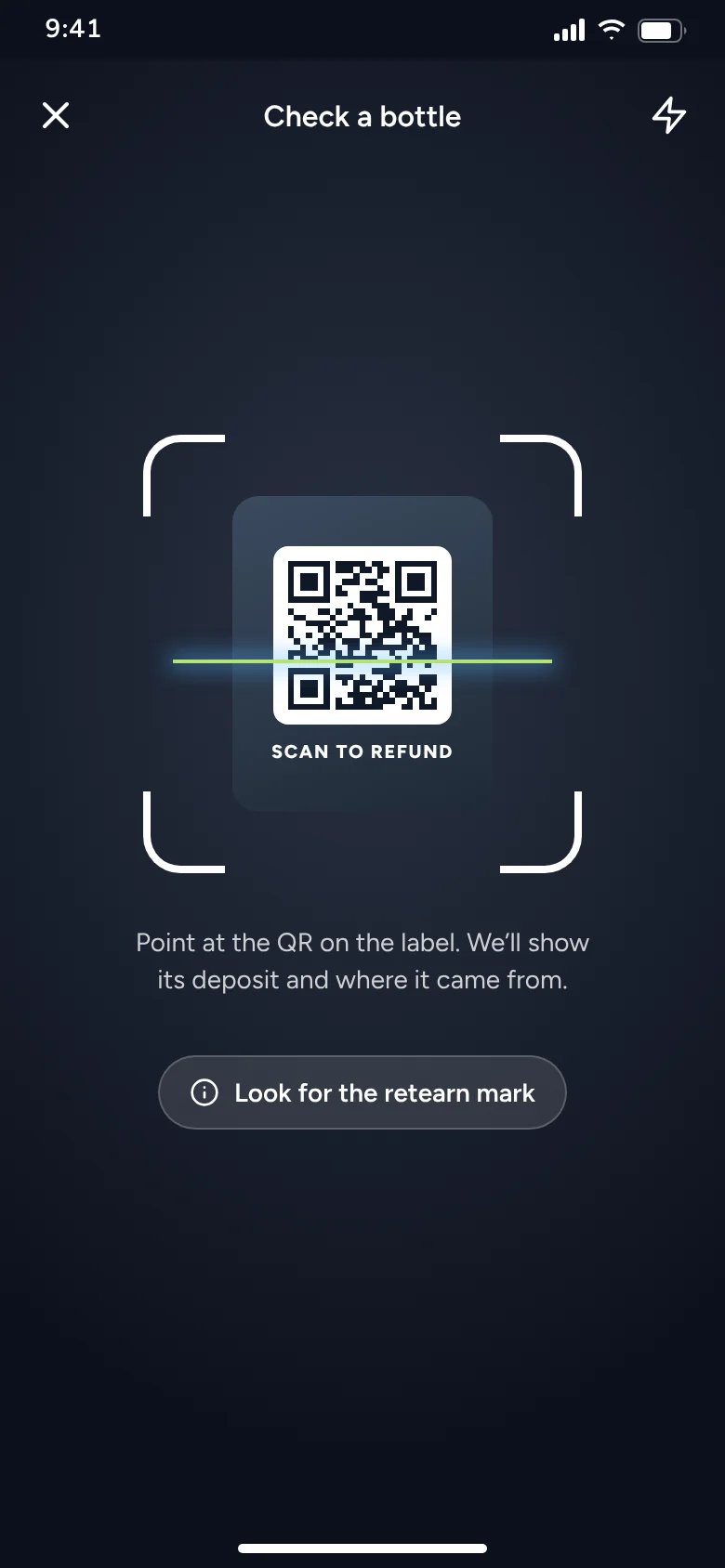
Check a bottle before you even buy it.
Scan any DRS label to see the deposit, the brand and where the bottle has been. Now and then a scan reveals a surprise reward.
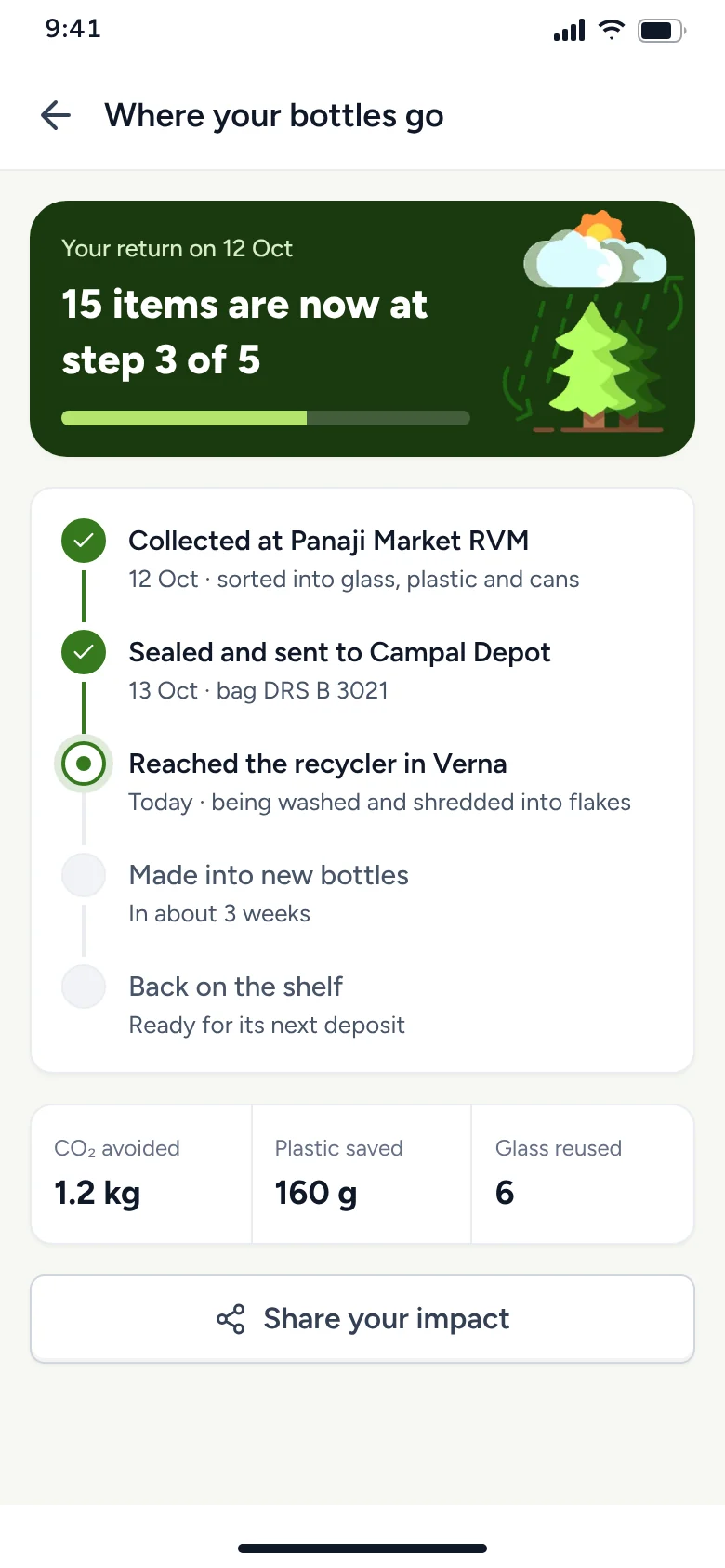
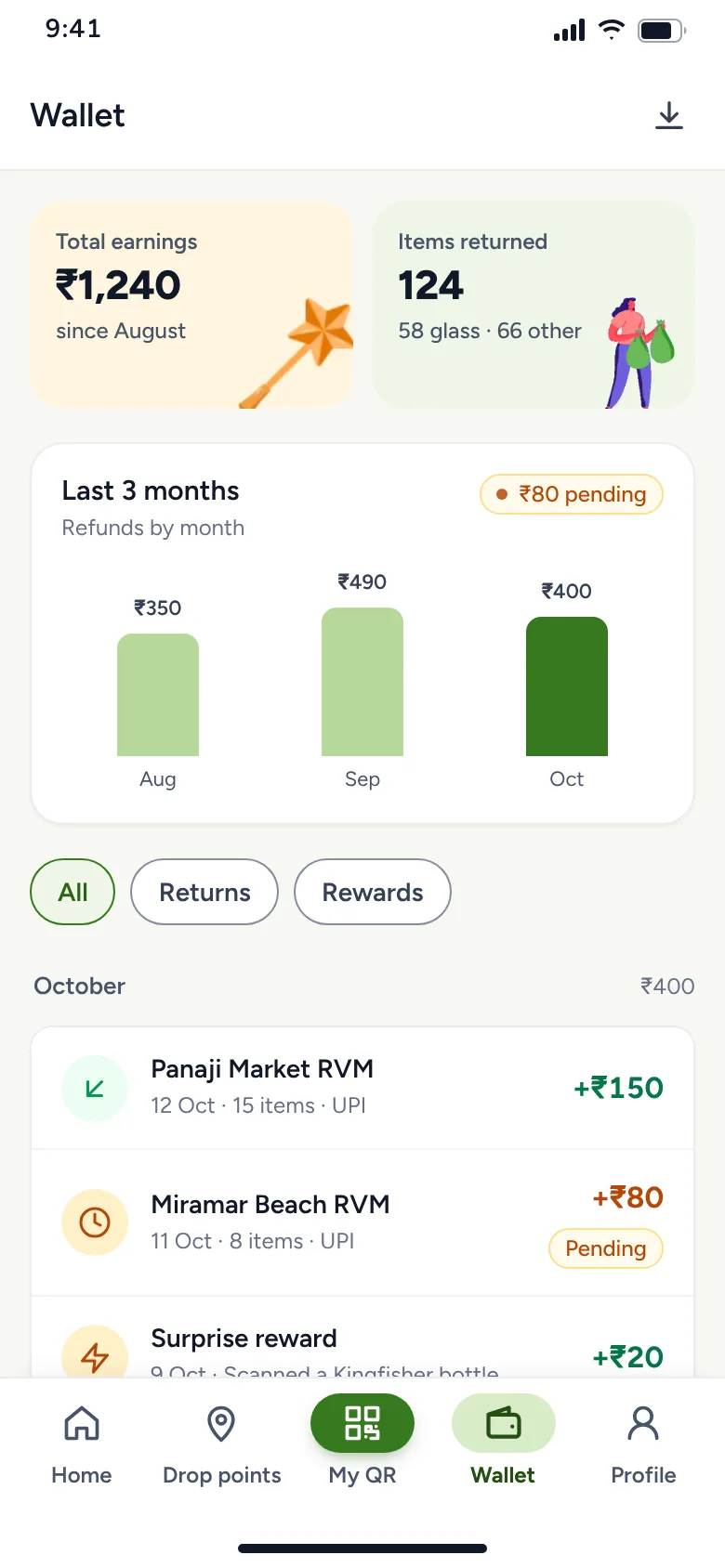
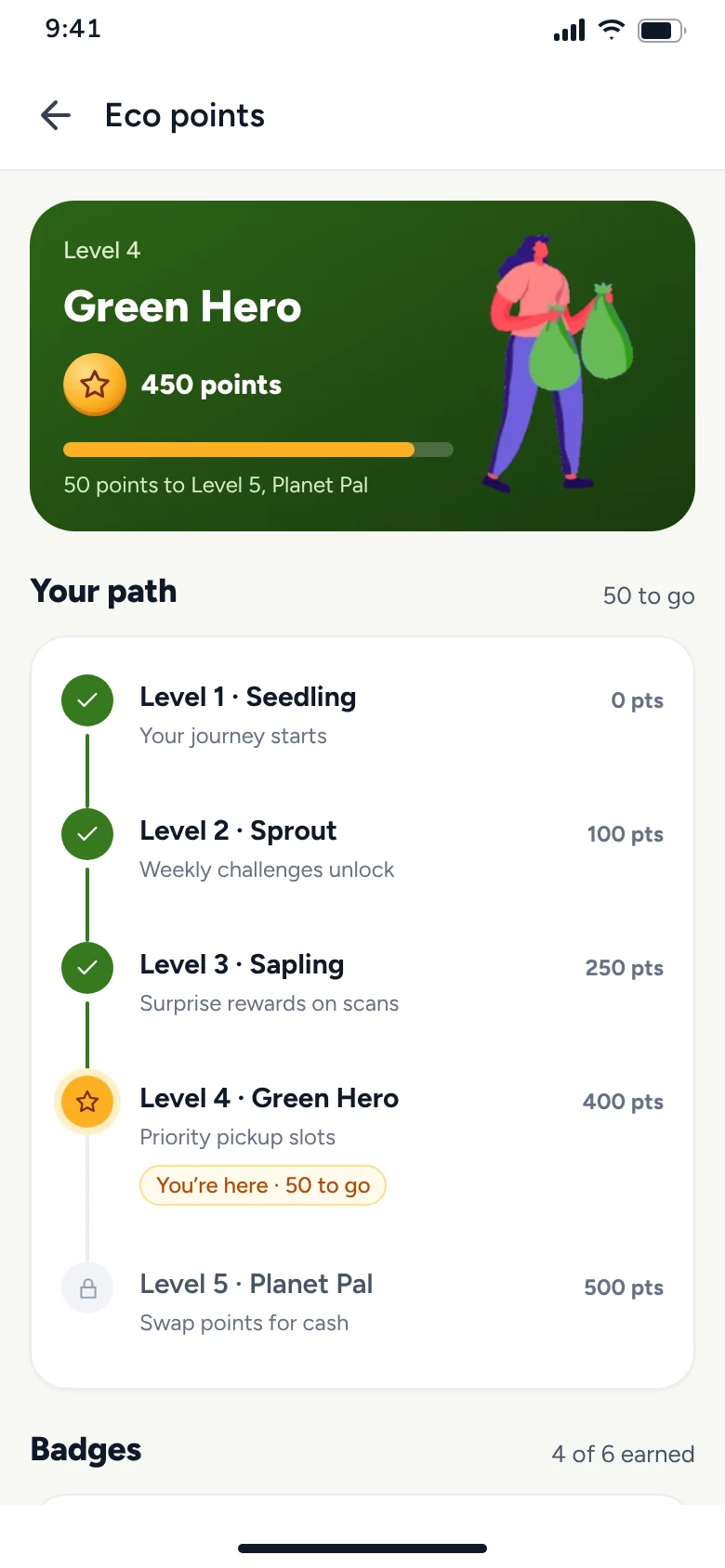
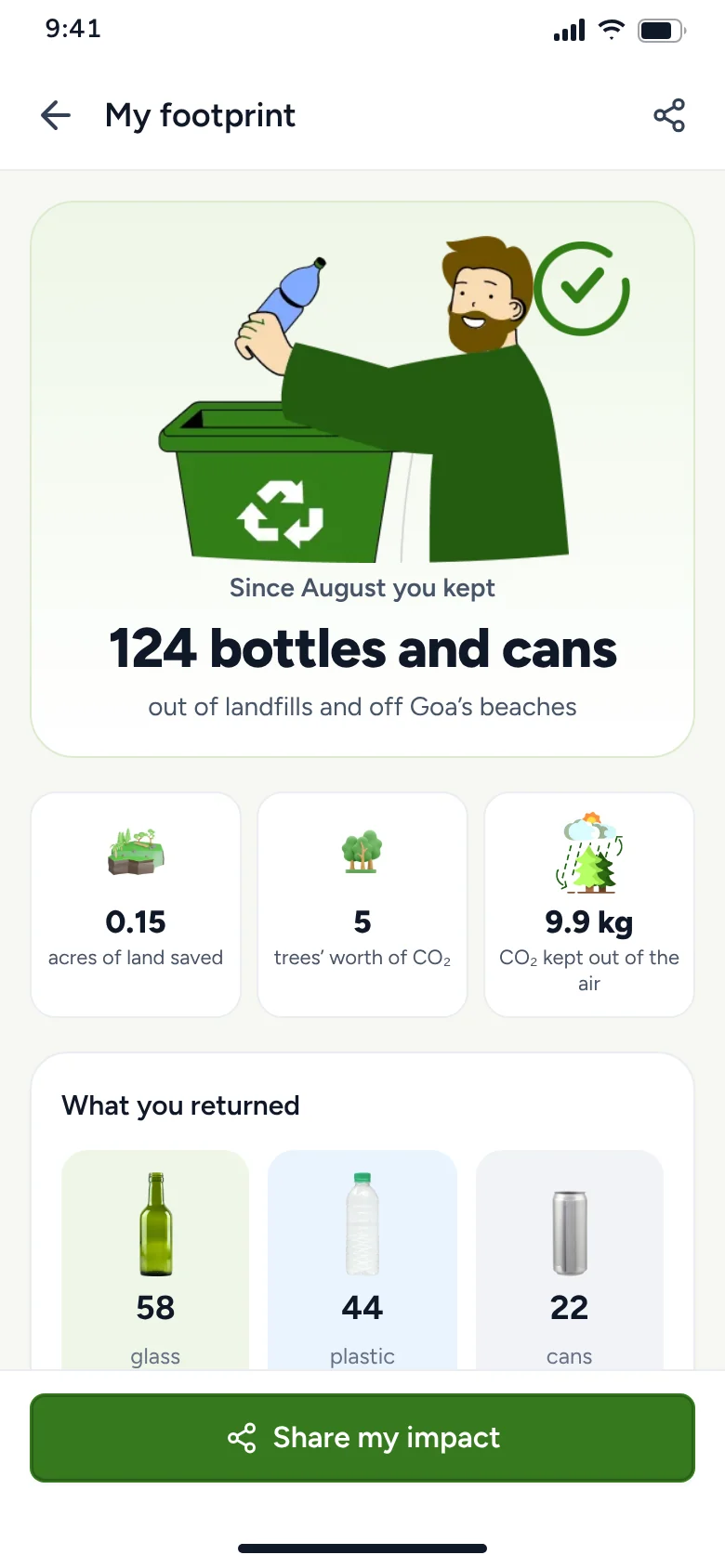
Wallet, eco points and your real footprint.
Every refund in one place, a level path from Seedling to Planet Pal, and the plastic you kept out of landfill, ready to share.

Small decisions that did the heavy lifting.
Show and tell: each choice below, the screen it lives on, and why we made it.
Show the money on the bottle itself
Refund card first, actions second
A live count you can trust
Show who is counting, and what it’s worth
Let the count choose the method
Progress as a path, not a bar
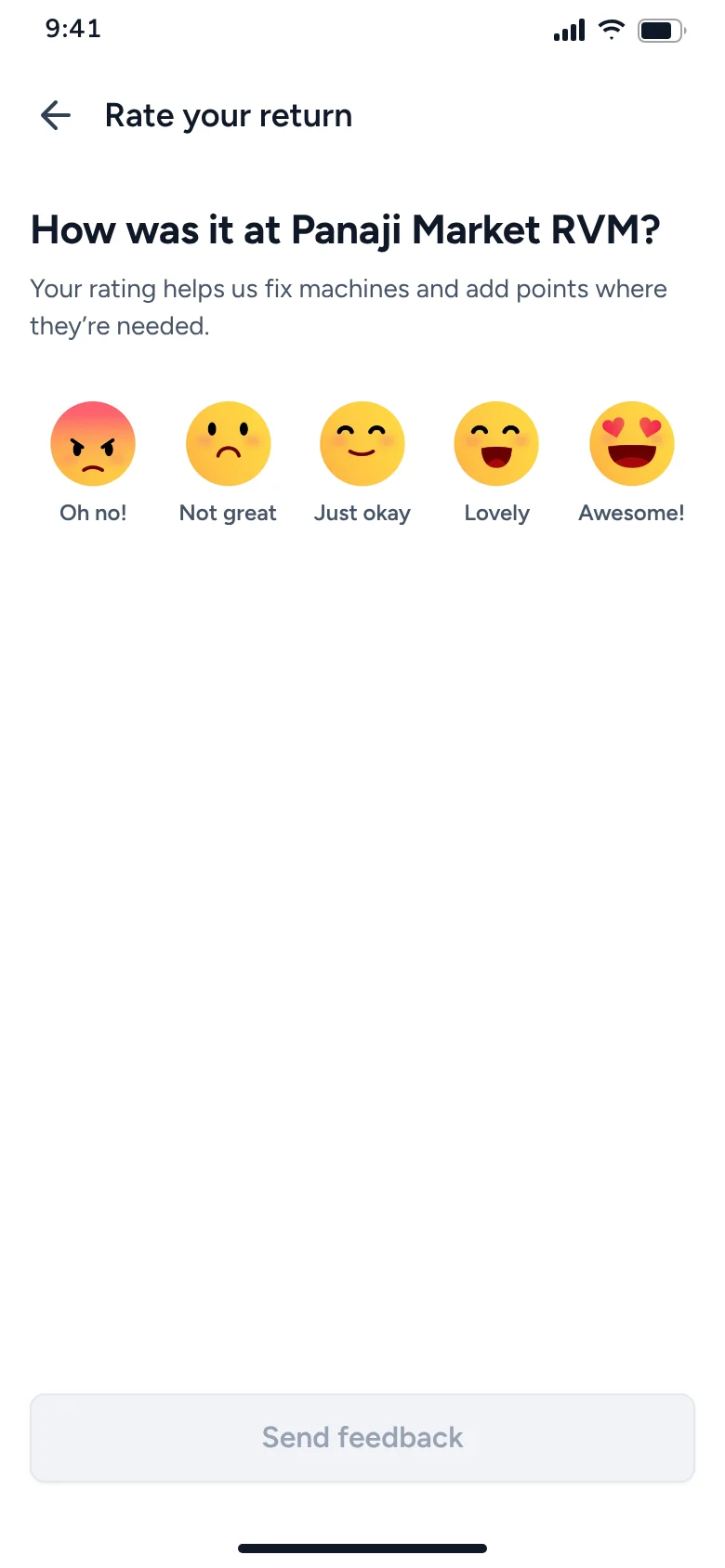
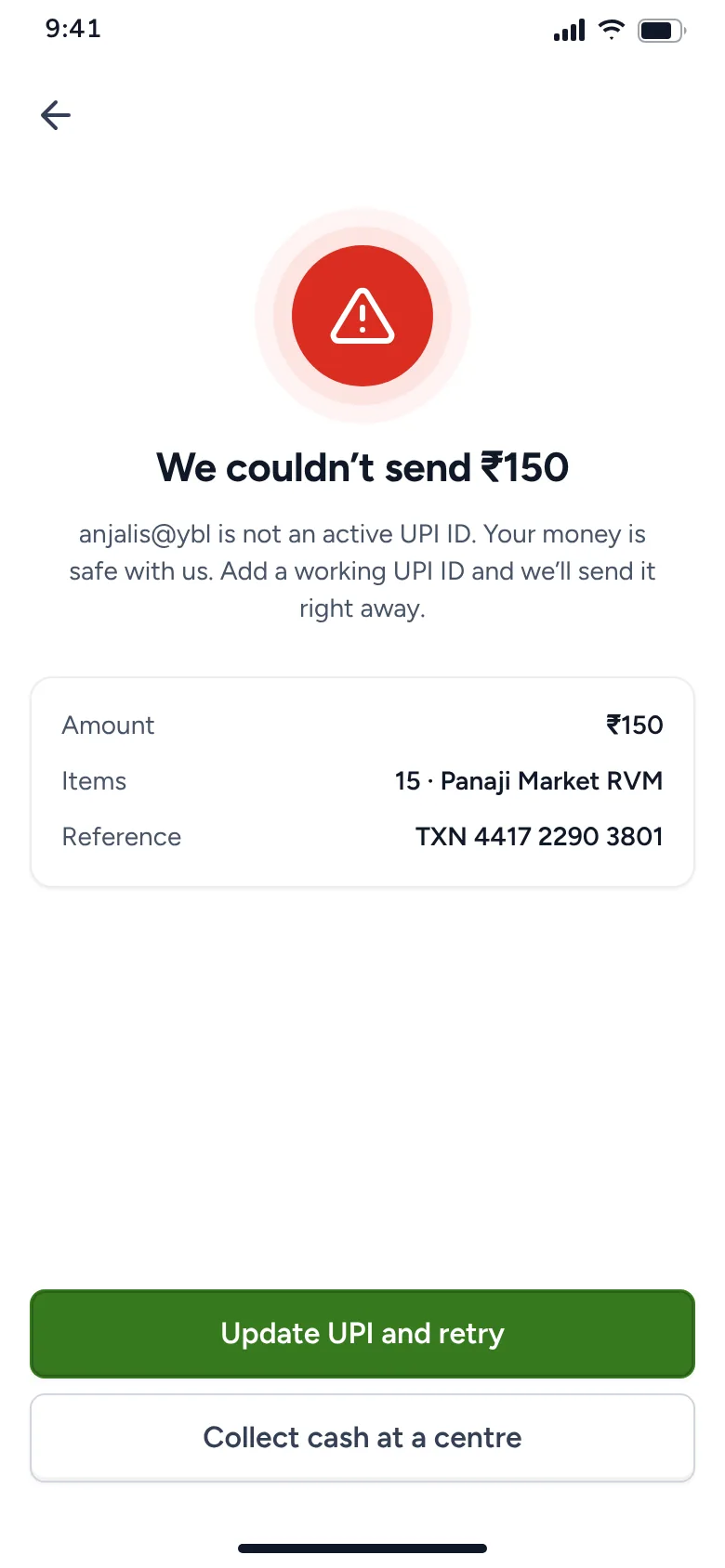
When it goes wrong, your money is still safe.
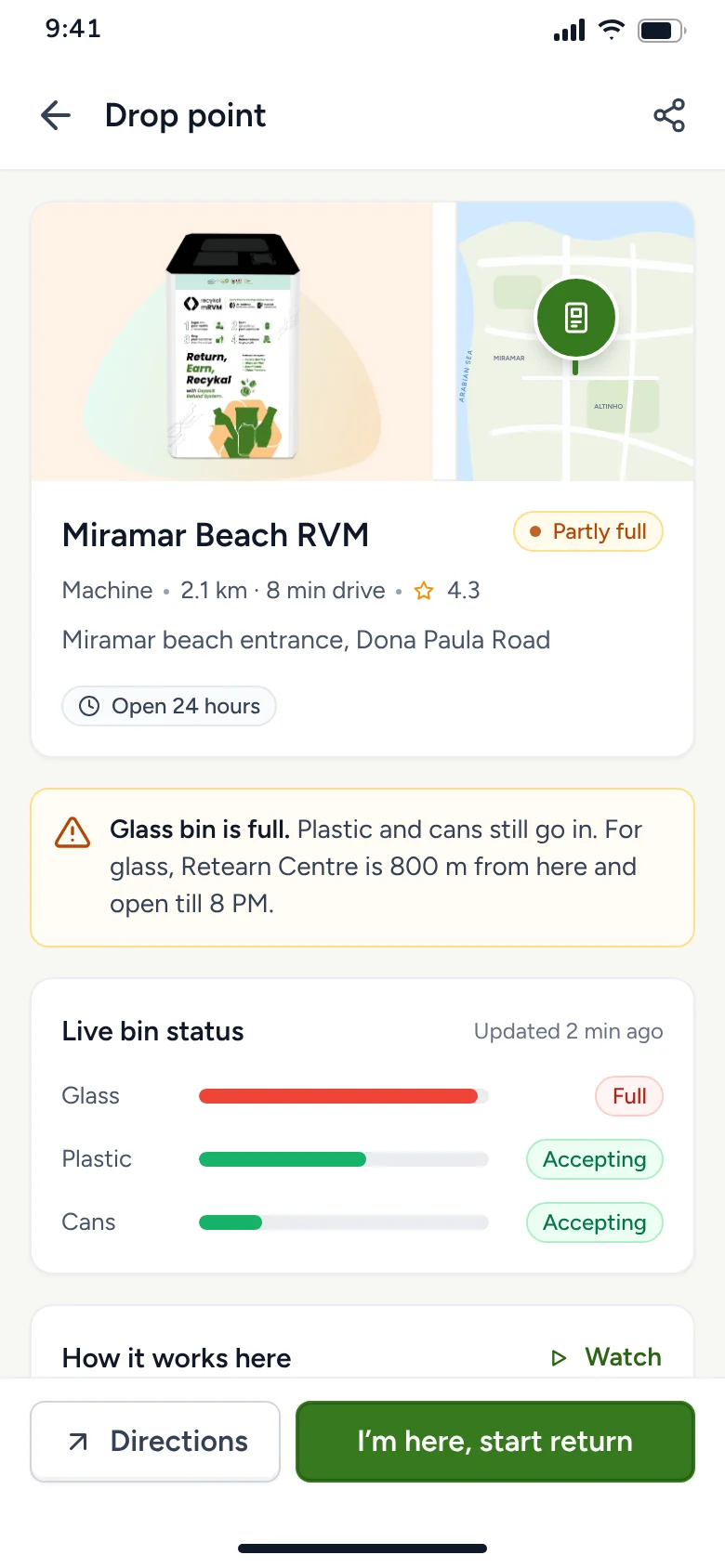
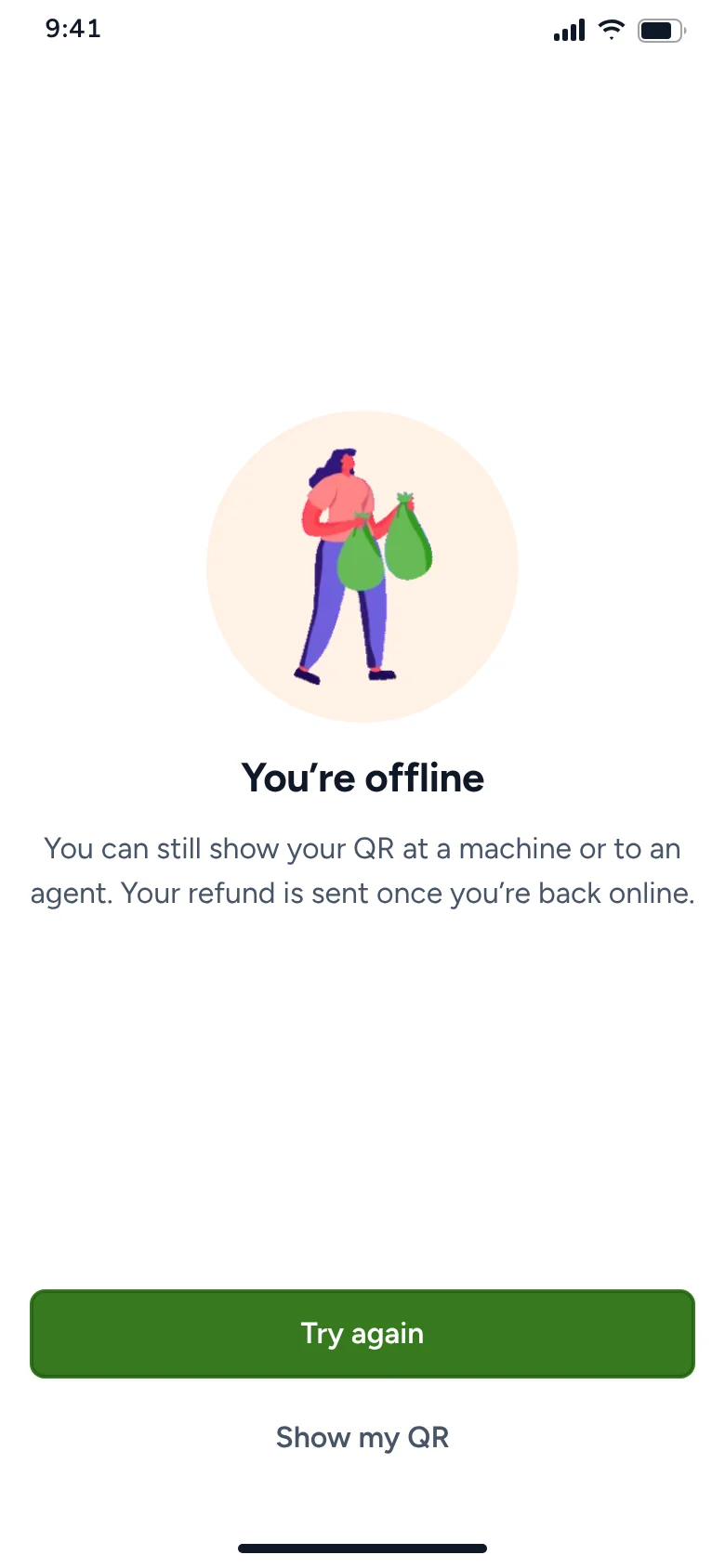
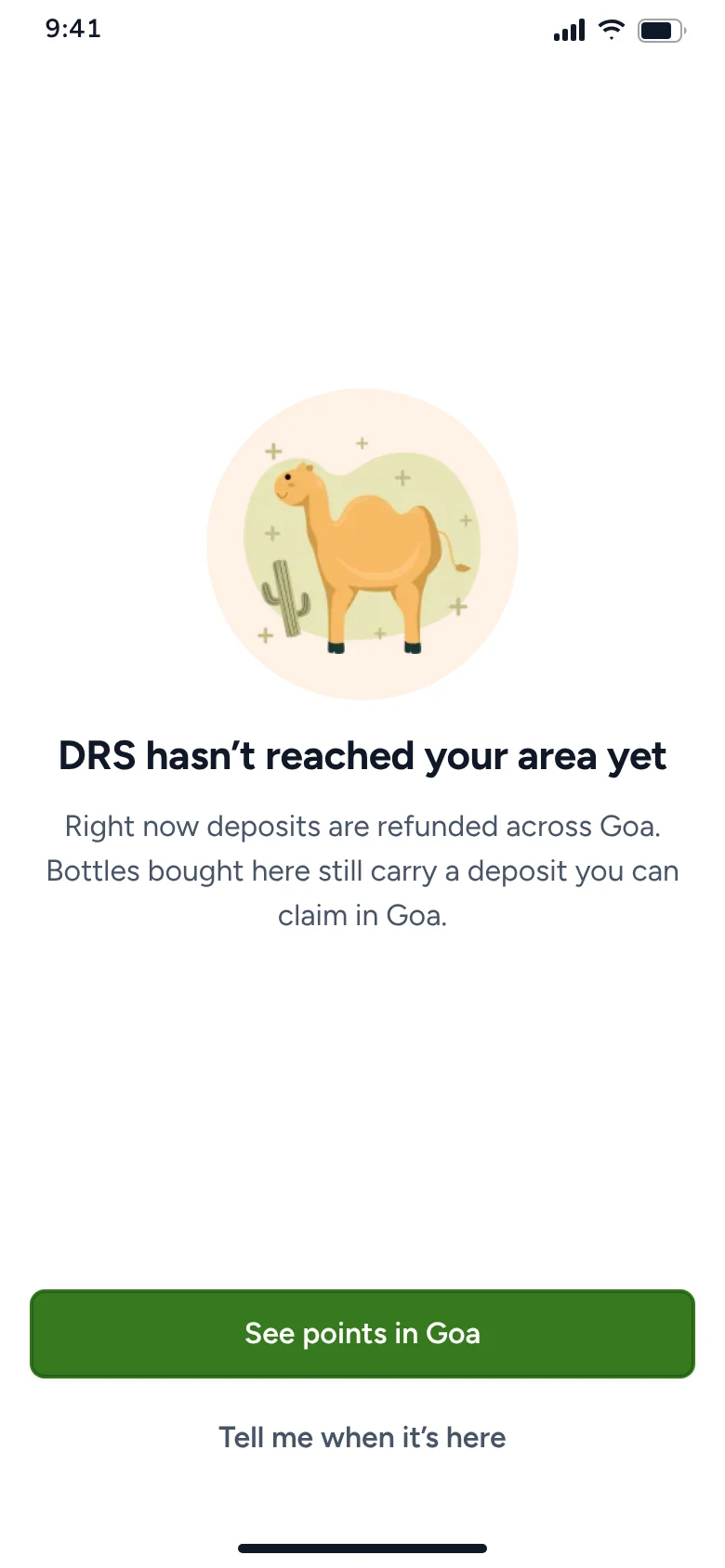
A full bin, a failed payout, no signal, a bottle that is not part of the scheme. Each one gets a calm screen that says what happened, that the deposit is safe, and the one thing to do next.
Leaf green, warm illustrations, big numbers.
A public app has to feel friendly before it feels efficient. A recycling green carries the brand, illustrations give it personality, and money is always the biggest thing on screen. The agent app shares the same parts in grape purple, so the two read as siblings.


 6Glass5Plastic4Cans
A bottle went from rubbish to money in your pocket.
The scheme recycled 1,60,000+ bottles in its first rollout. The app's part was making each of those returns quick, clear and worth coming back for.