Every bottle carries a deposit. Every deposit has to come back.
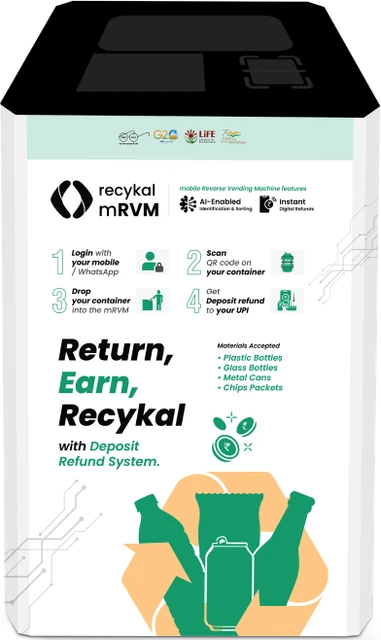
Under DRS, every drink sold carries a small refundable deposit. Consumers return the empty to a reverse vending machine or a Soundbox, or hand it to a collection agent. The deposit lands back on UPI and the container goes to recycling, not landfill.



Buy, pay a deposit
₹5 to ₹15 per bottle or can, printed on a DRS QR label.
Return to a machine or an agent
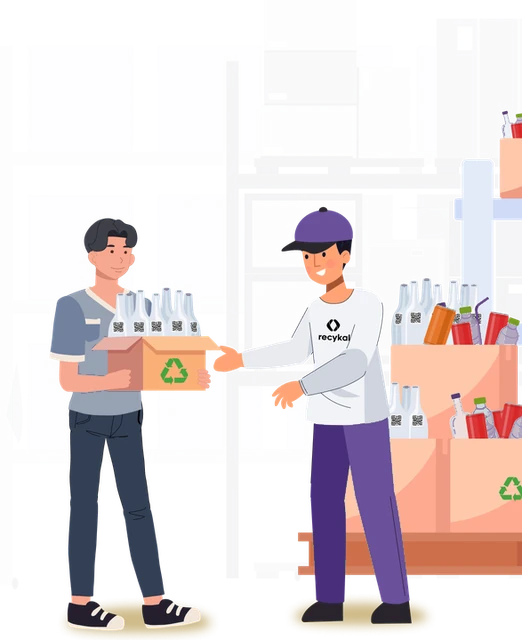
Machines handle the flow. Agents cover queues, outages and bulk returns.

Deposit back on UPI
The agent pays it from their float, then gets it back with a handling fee.
The agent is the system's backup and its last mile. If they slow down, refunds stall, bags go missing and machines overflow.
We built the machines. The pilot showed us what was missing.
To bring DRS to India, Recykal first built its own collection machines and pitched the scheme to several state governments. Uttarakhand said yes and gave us the Kedarnath trek for the first pilot. Running it every day is where the real problems showed up.
Built the machines
Recykal designed its own RVMs and Soundboxes for Indian conditions.
Pitched to governments
We took DRS to several states looking for a place to start.
Pilot on the Kedarnath trek
Uttarakhand gave permission to run the first pilot on the trek.
Problems surfaced
Running machines daily, we listed every issue agents hit.
One app for agents
A combined solution, now used wherever DRS runs.
The system was not broken. It was disconnected.
Machines, returns, bags, money and pickups each lived somewhere else: a register, a phone call, a WhatsApp group.
Not six fixes. One dedicated app for agents.
We took the list to the team and agreed on a combined solution: one operational layer for the people who keep DRS running, wherever it runs.
We found the problems on the ground, not in a meeting room.
During the Kedarnath pilot I shadowed agents through full shifts, sat with area managers reconciling registers at night, and listened to ops calls about missing bags. Then we tested every release with them on site.
“When forty people are waiting, I cannot type a UPI ID.”
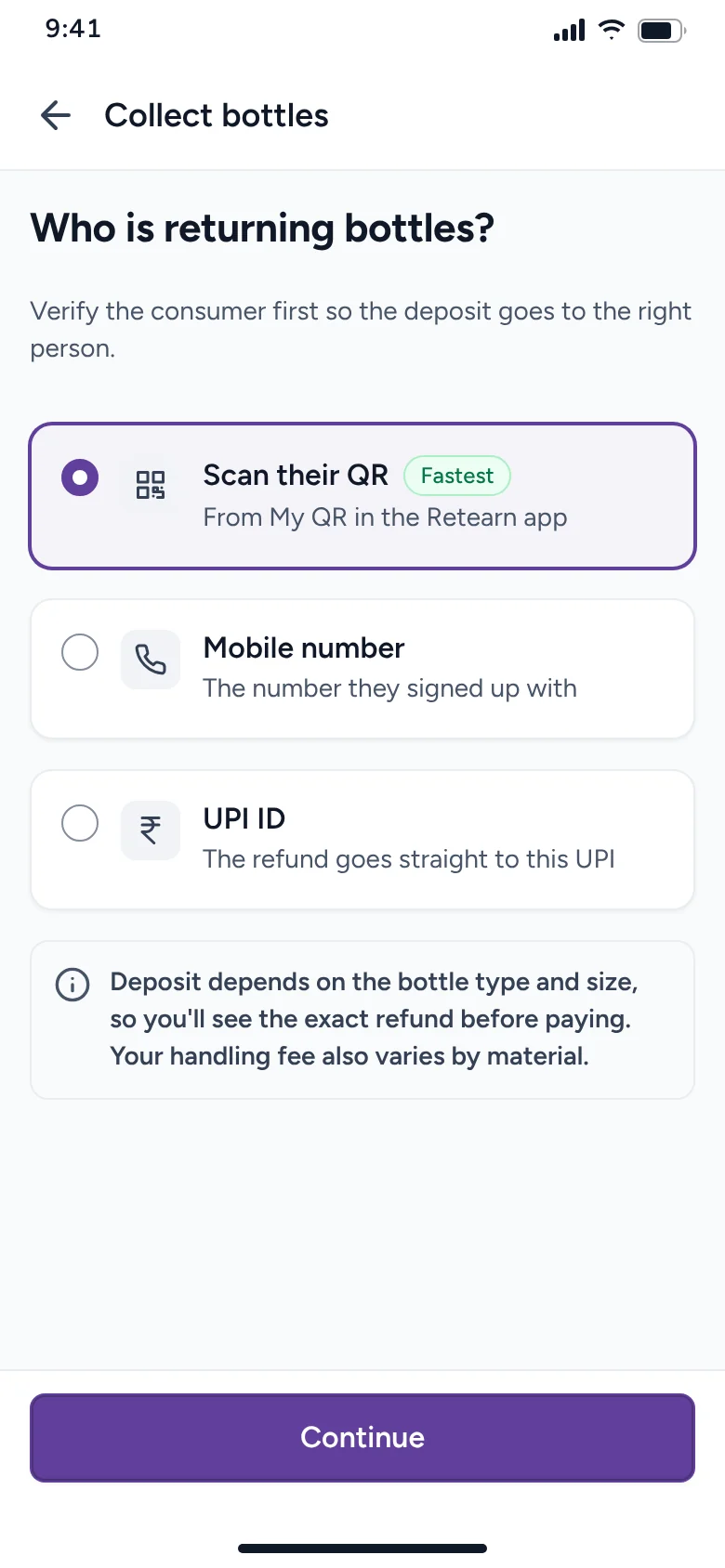
Insight · Verify by scanning the consumer QR first. Typing is the fallback.
“They always say the count is wrong. I need proof.”
Insight · Show the count per material and the refund maths before paying.
“A bag leaves my counter and I never hear about it again.”
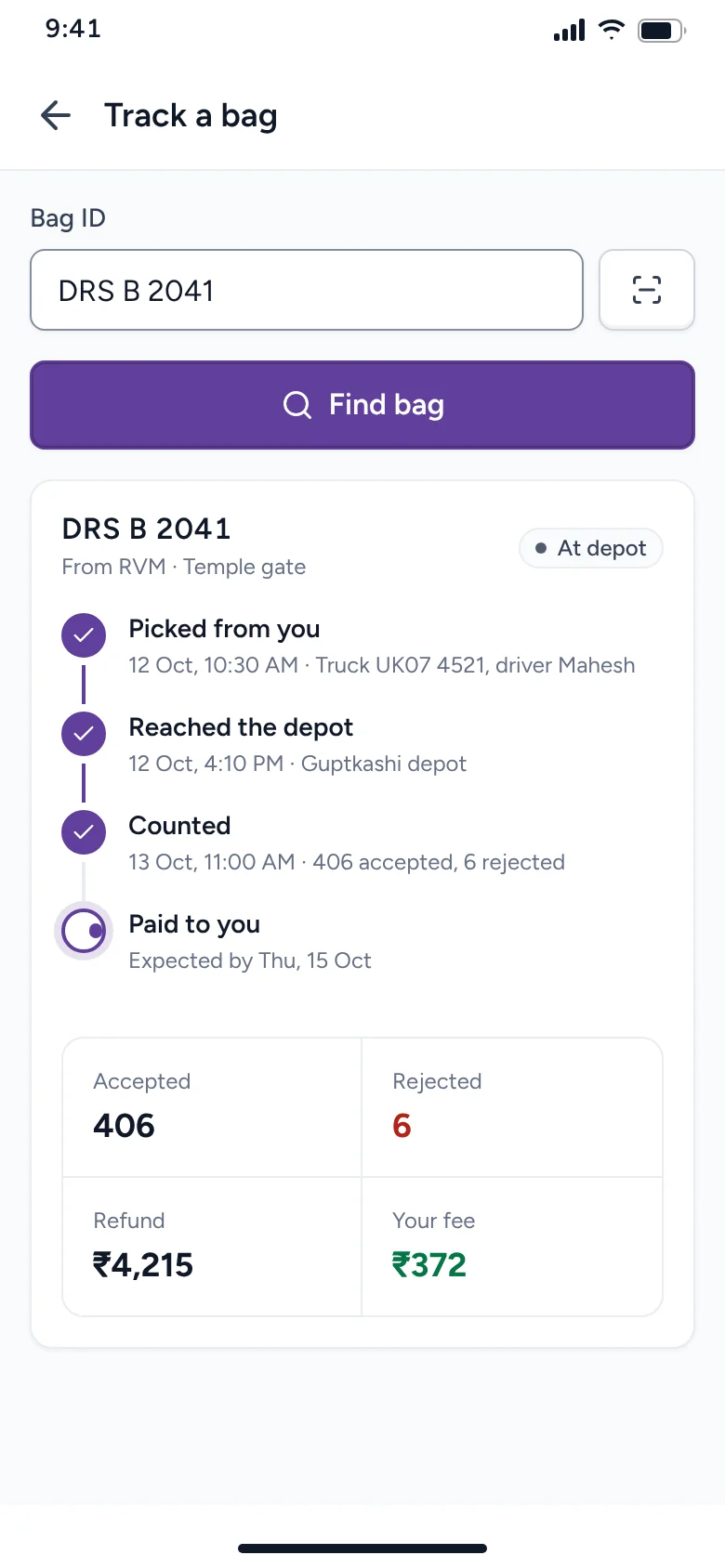
Insight · Give every bag an ID and a tracked journey to the depot.
“Above Gaurikund the network comes and goes all day.”
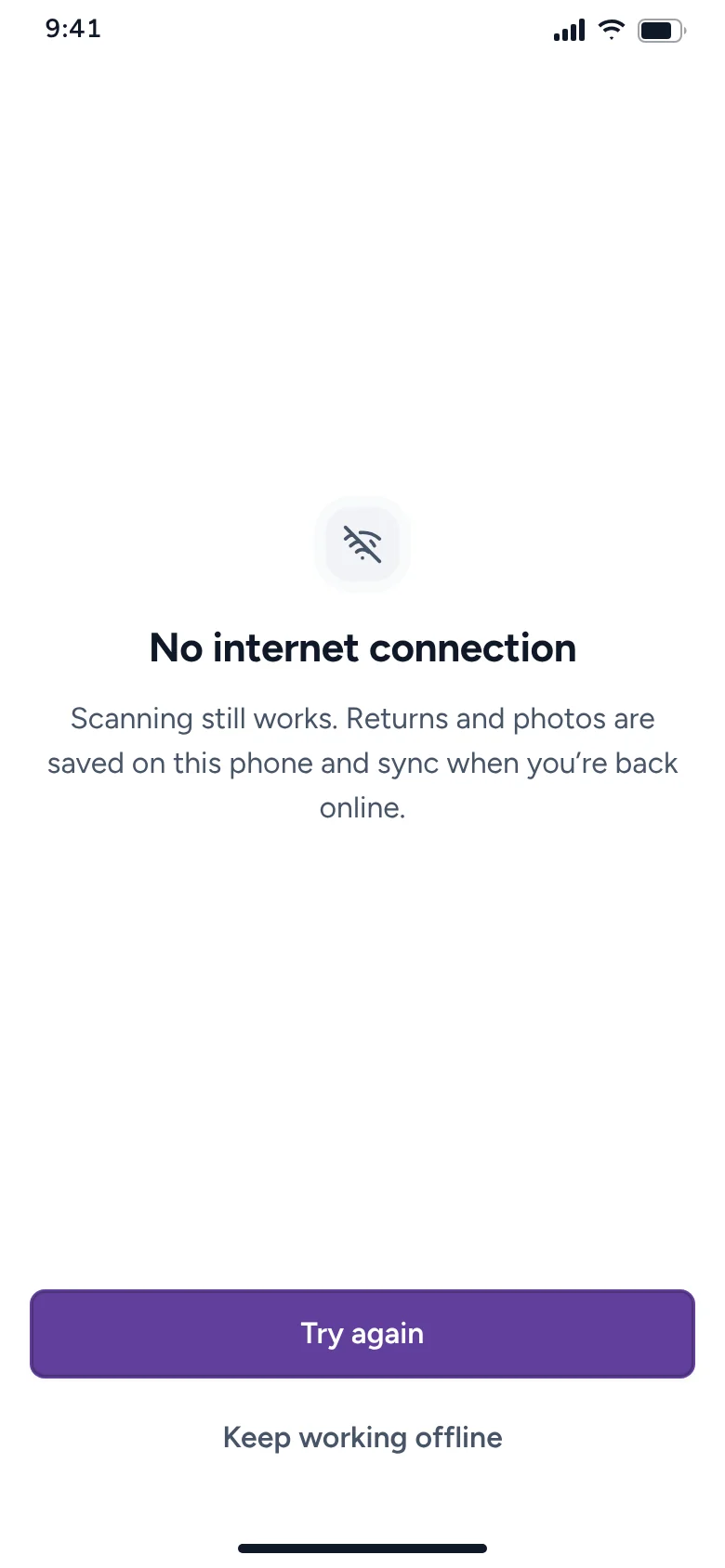
Insight · Scanning and counting work offline. Payments queue and retry.
“I want to clear the queue fast and know my fee is counted.”
“I need to see which point is struggling before the pilgrims do.”
Built for the field, one hand and one bar of signal.
Scan before you type
QR first for people, bottles, bags and machines. Keyboards only as the fallback.
Every verify step starts with the cameraShow the money
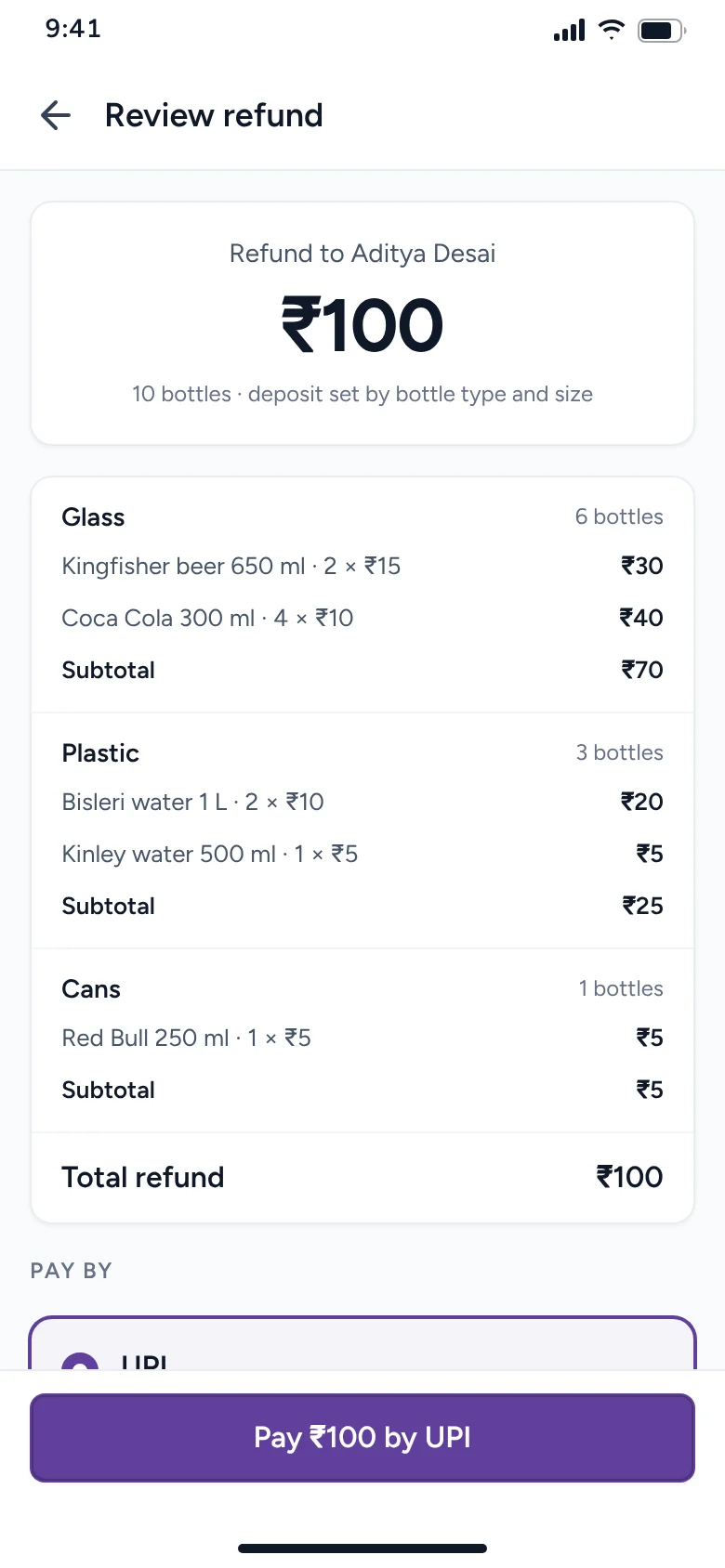
Refund maths, fees and bonuses on screen before anyone is paid.
Review refund before PayNothing gets lost
Every bag, payment and task has an ID and a status you can find later.
Track any bag by its IDWork without signal
Counting, bags and photos work offline and sync when the network returns.
Queued payouts retry on their ownFive tabs, one shift.
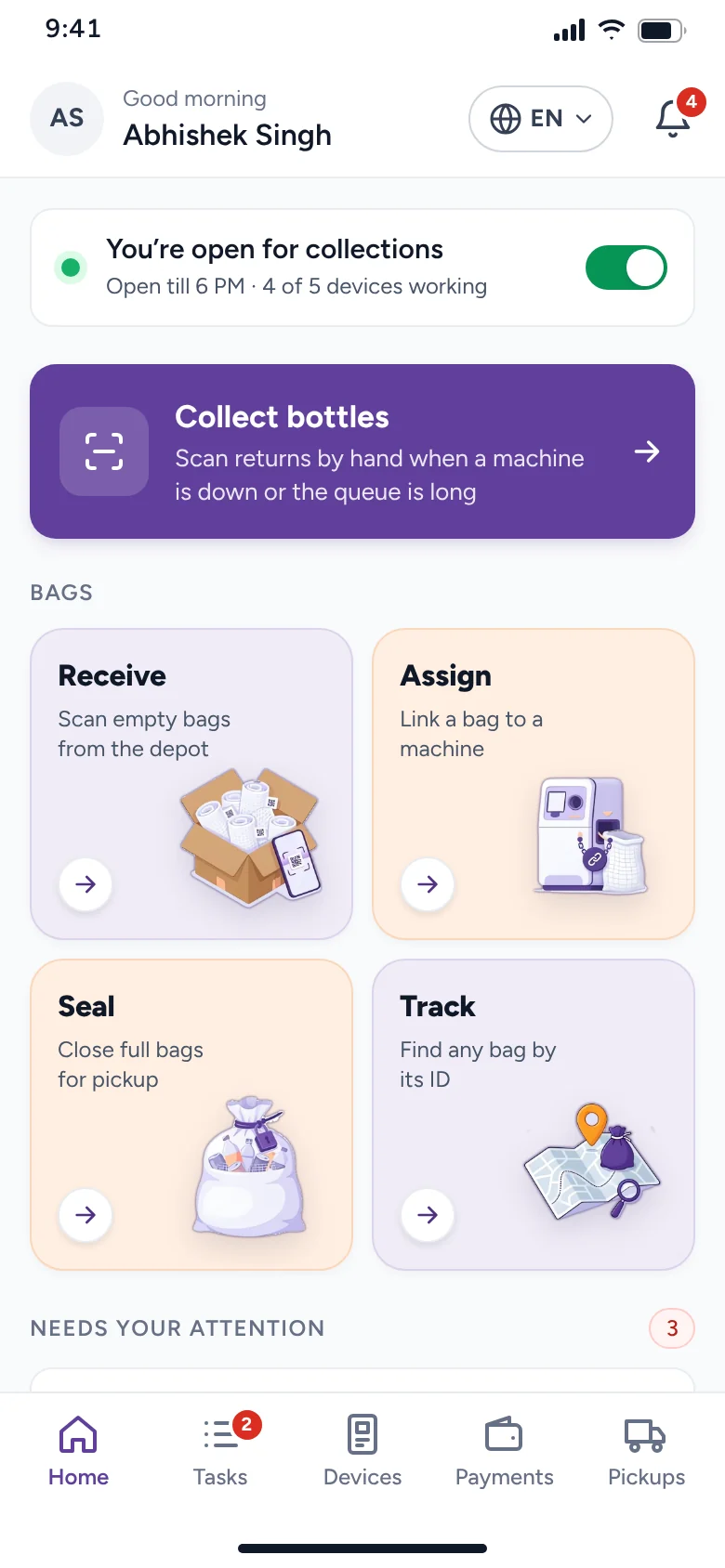
We sorted 60 card sort notes from agents into the order a shift actually runs: start on Home, act on Tasks, watch Devices, check Payments, close the day on Pickups.
Open the app, know what needs you.
Ordered by how often each thing happens in a shift, not by feature.
Four jobs, designed end to end.
Each flow below is a real path through the shipped prototype, including what happens when it goes wrong.
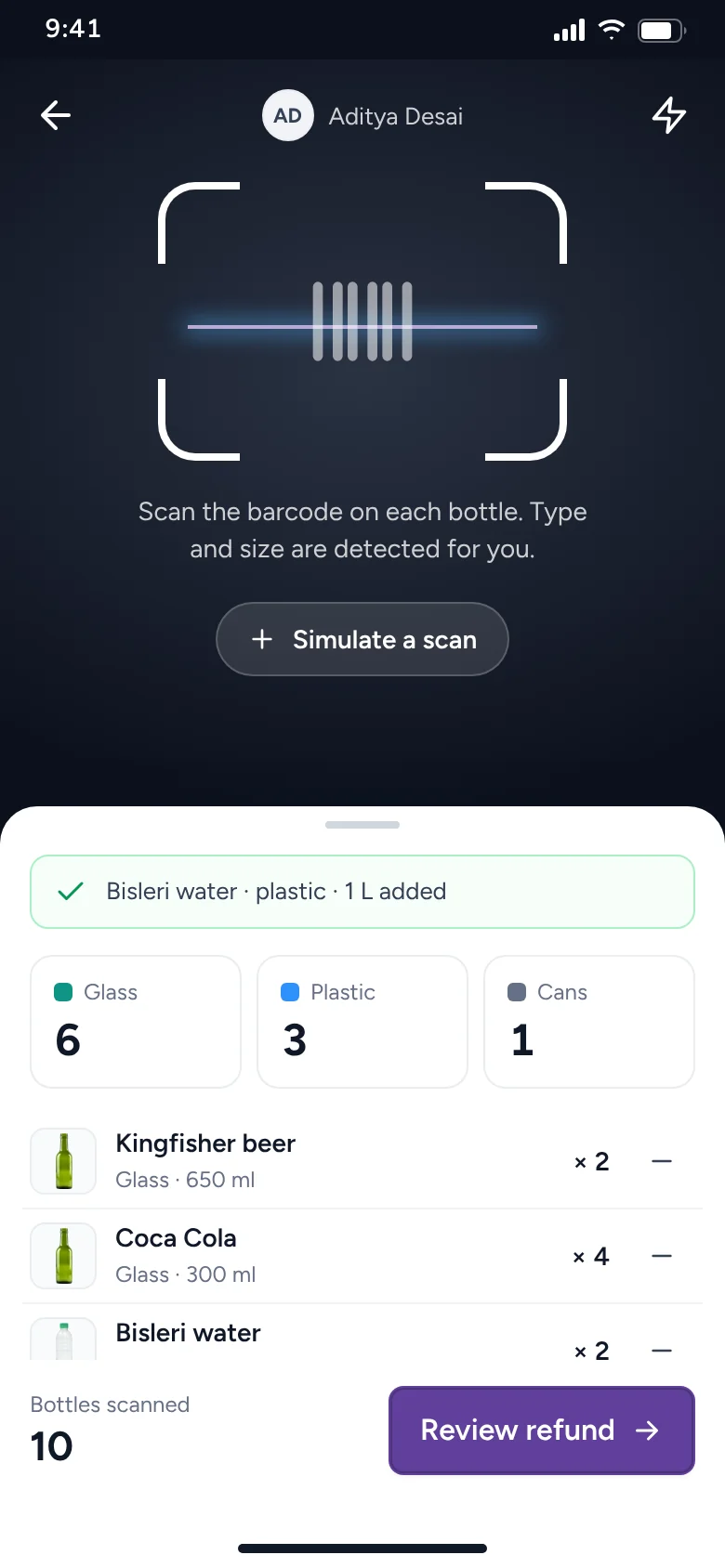
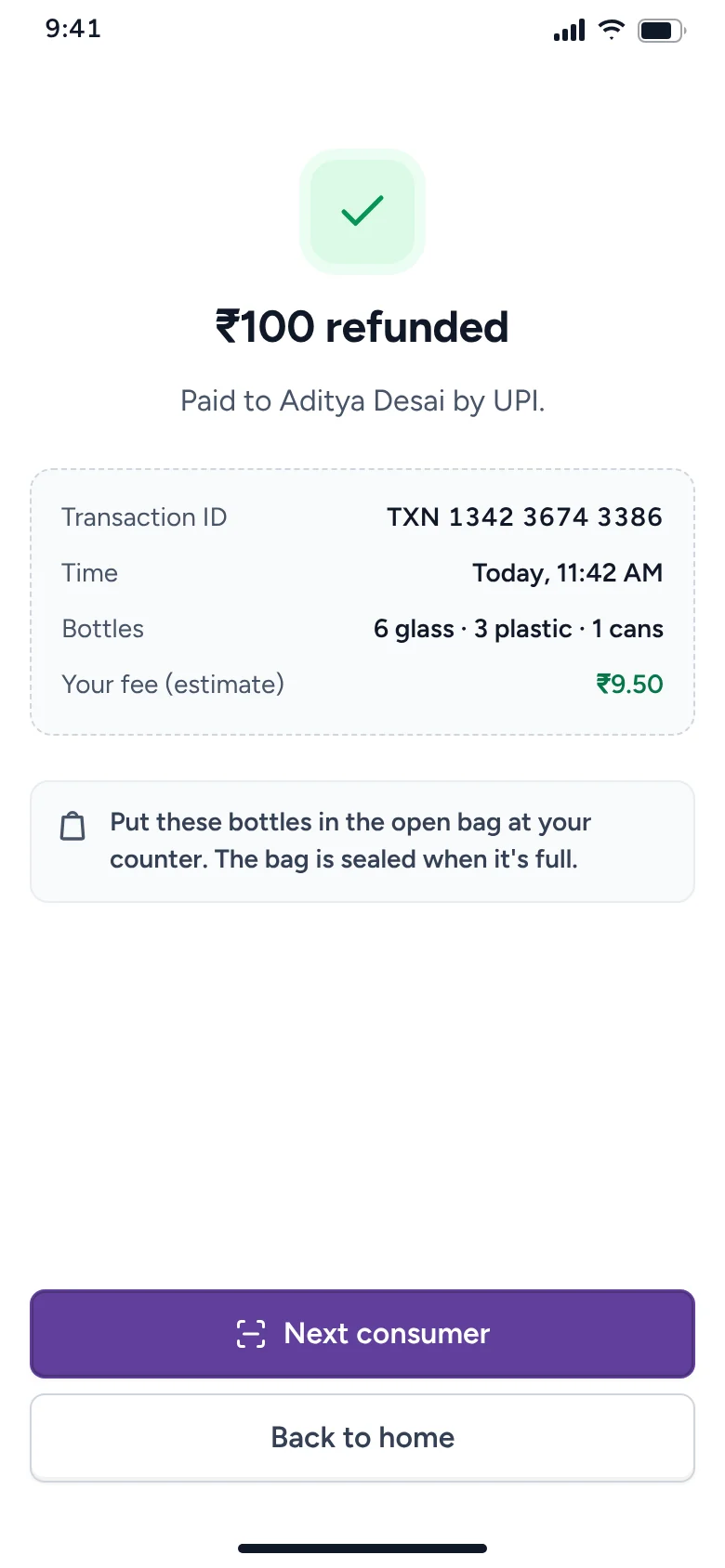
Collect by hand, refund in under a minute.
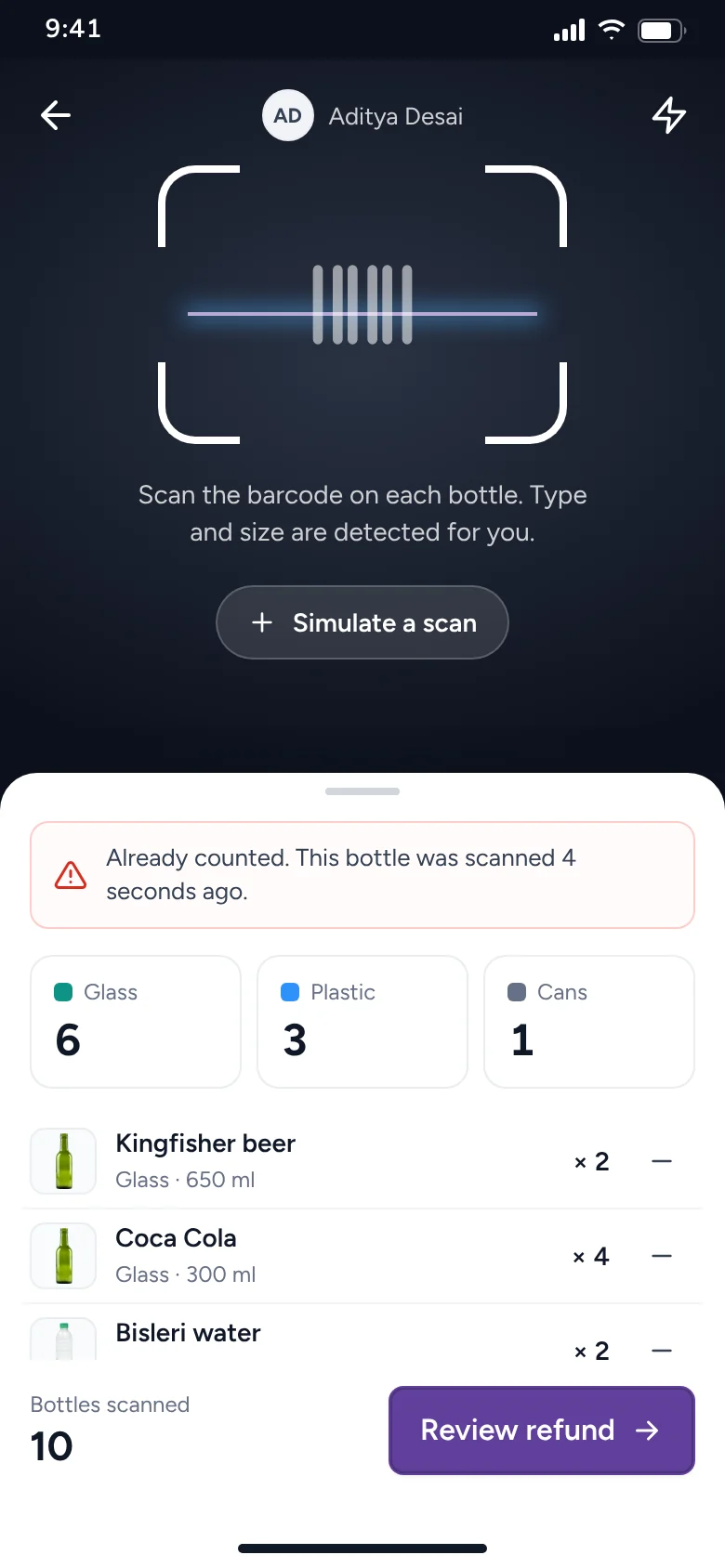
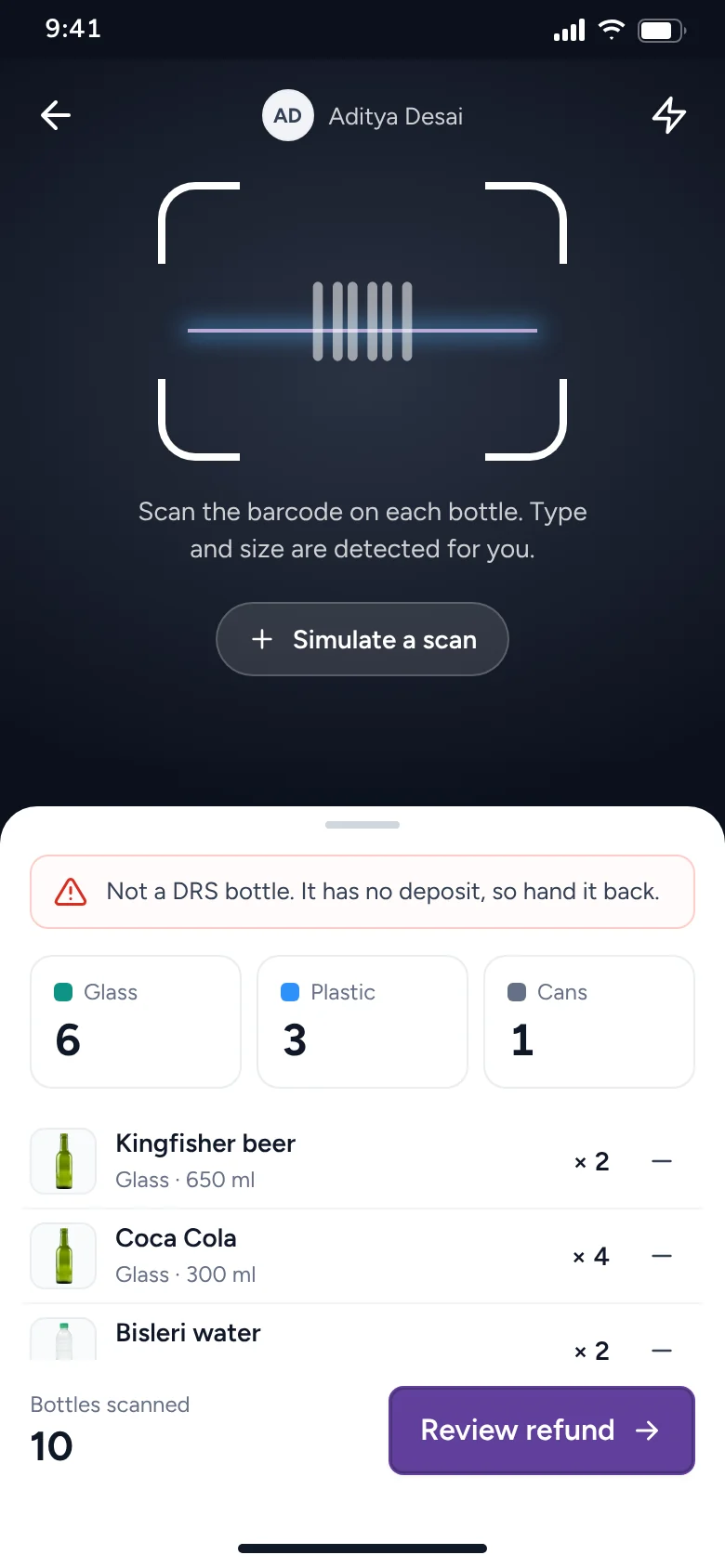
Scan the consumer, scan each bottle, review the maths, pay on UPI. Duplicate and non DRS bottles are caught at the scanner, not at the depot.
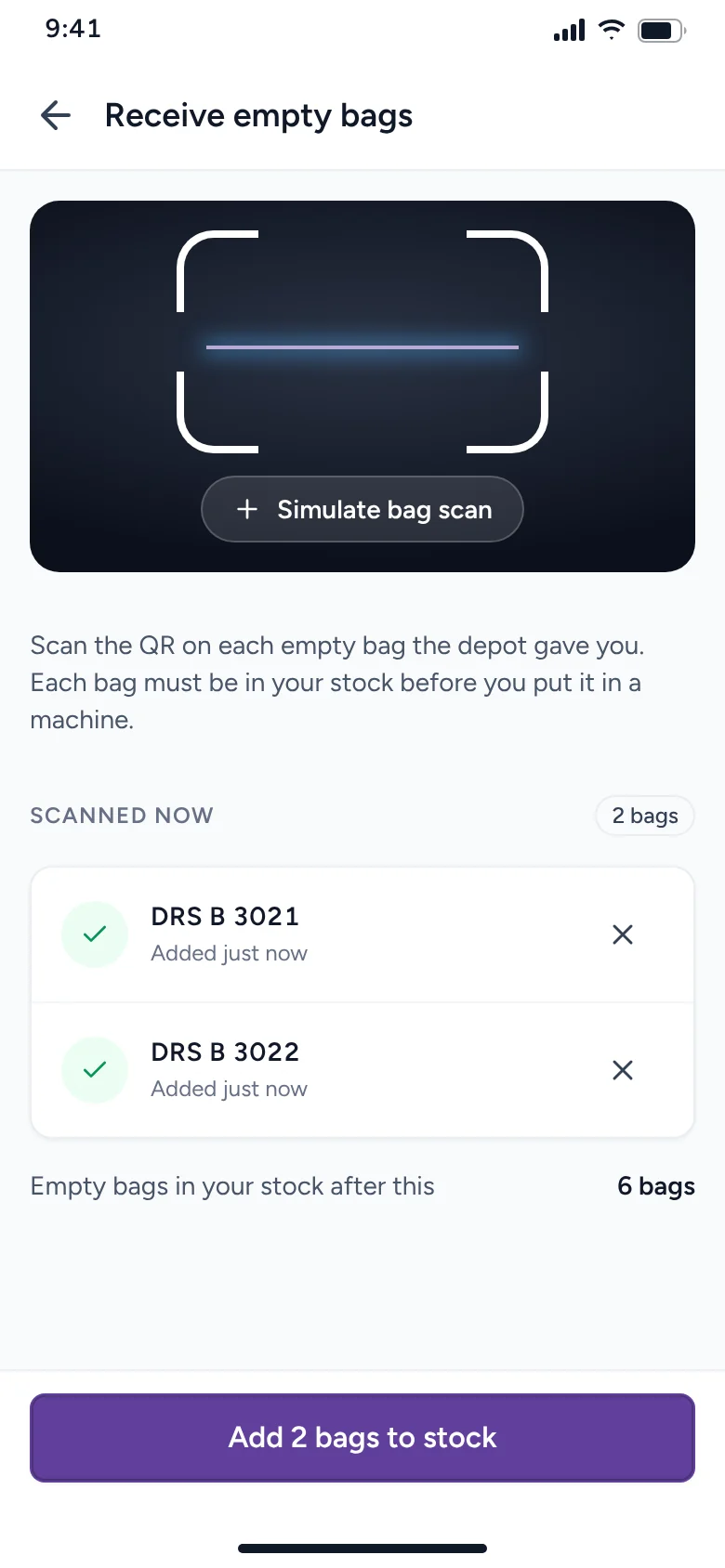
From empty sack to the depot, never off the map.
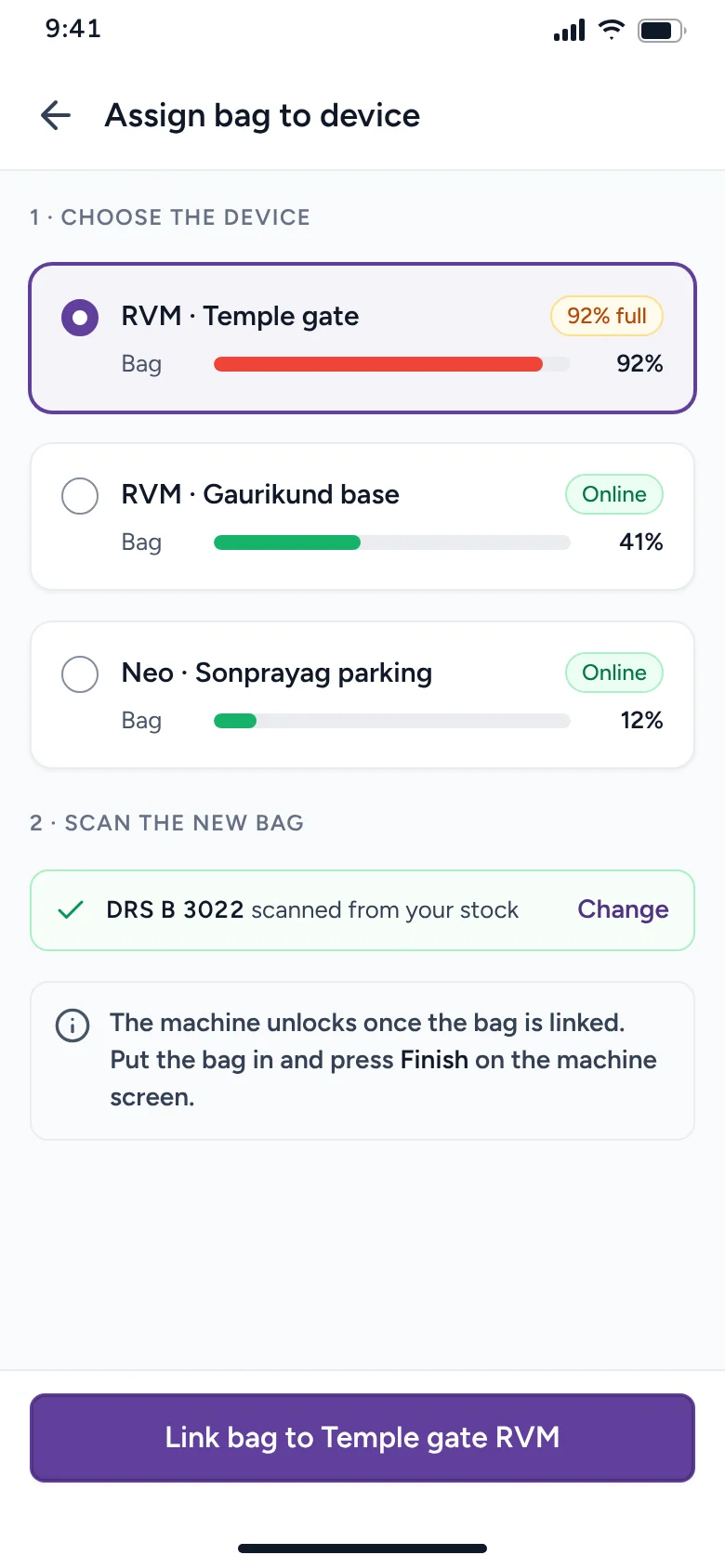
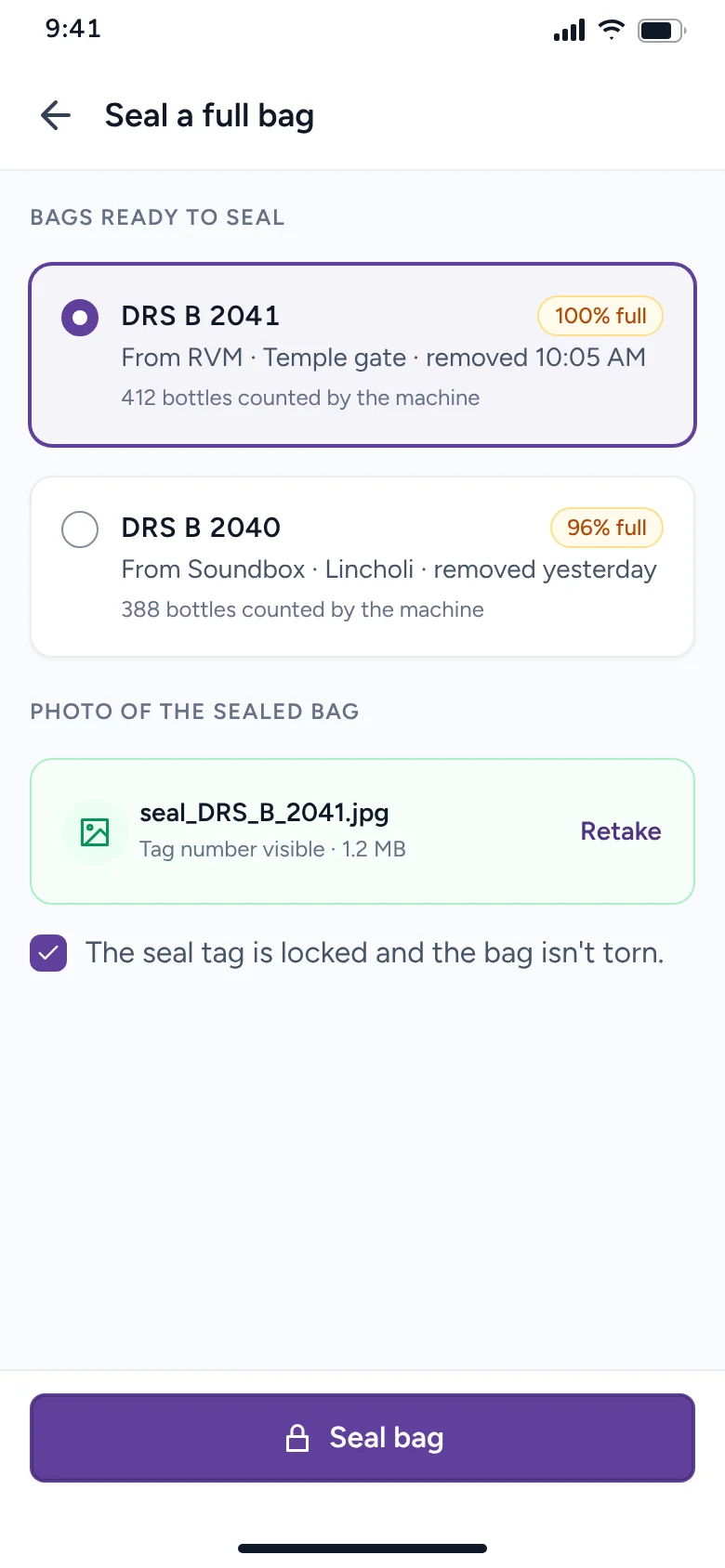
Bags are scanned in from the depot, linked to a machine, sealed with a photo of the tag, then tracked until they are counted and paid.

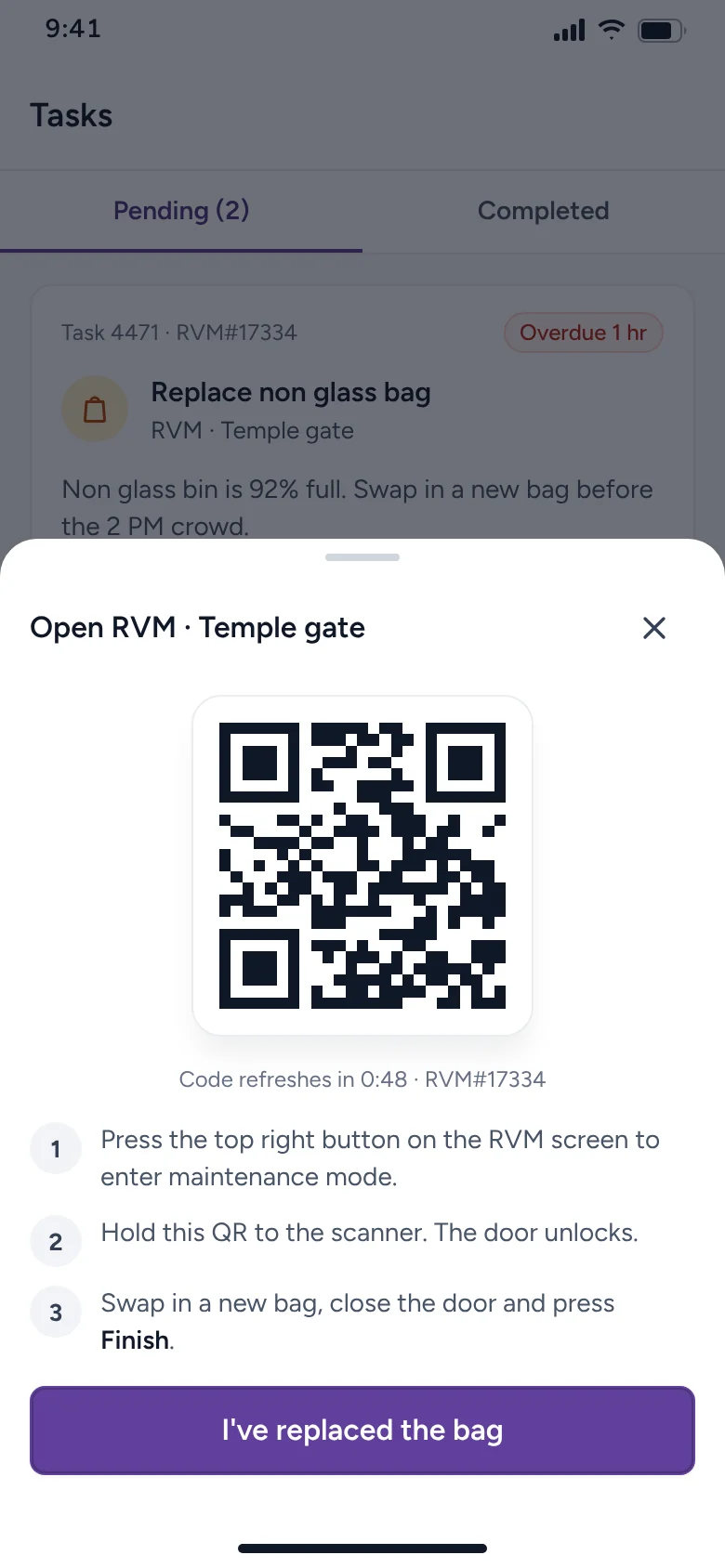
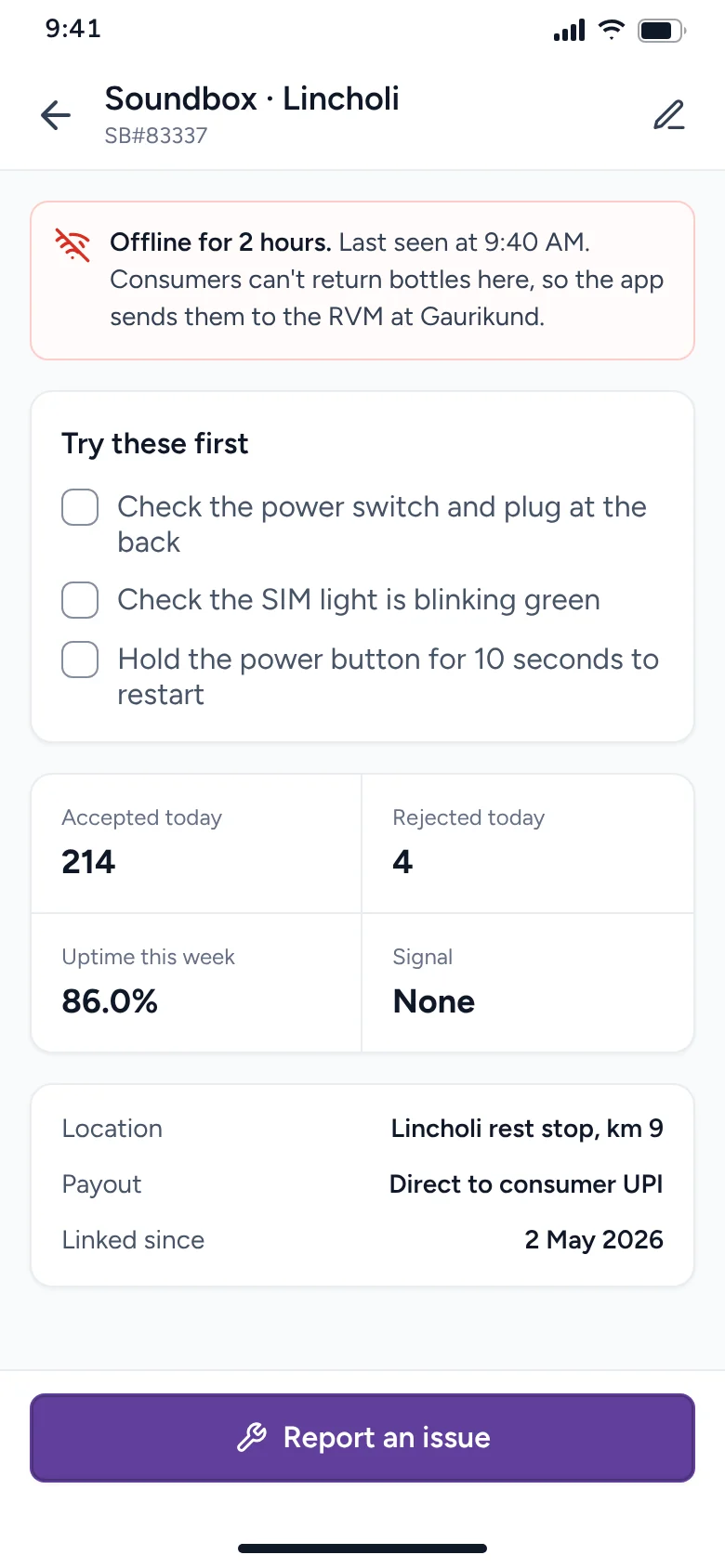
Fix the machine before consumers notice.
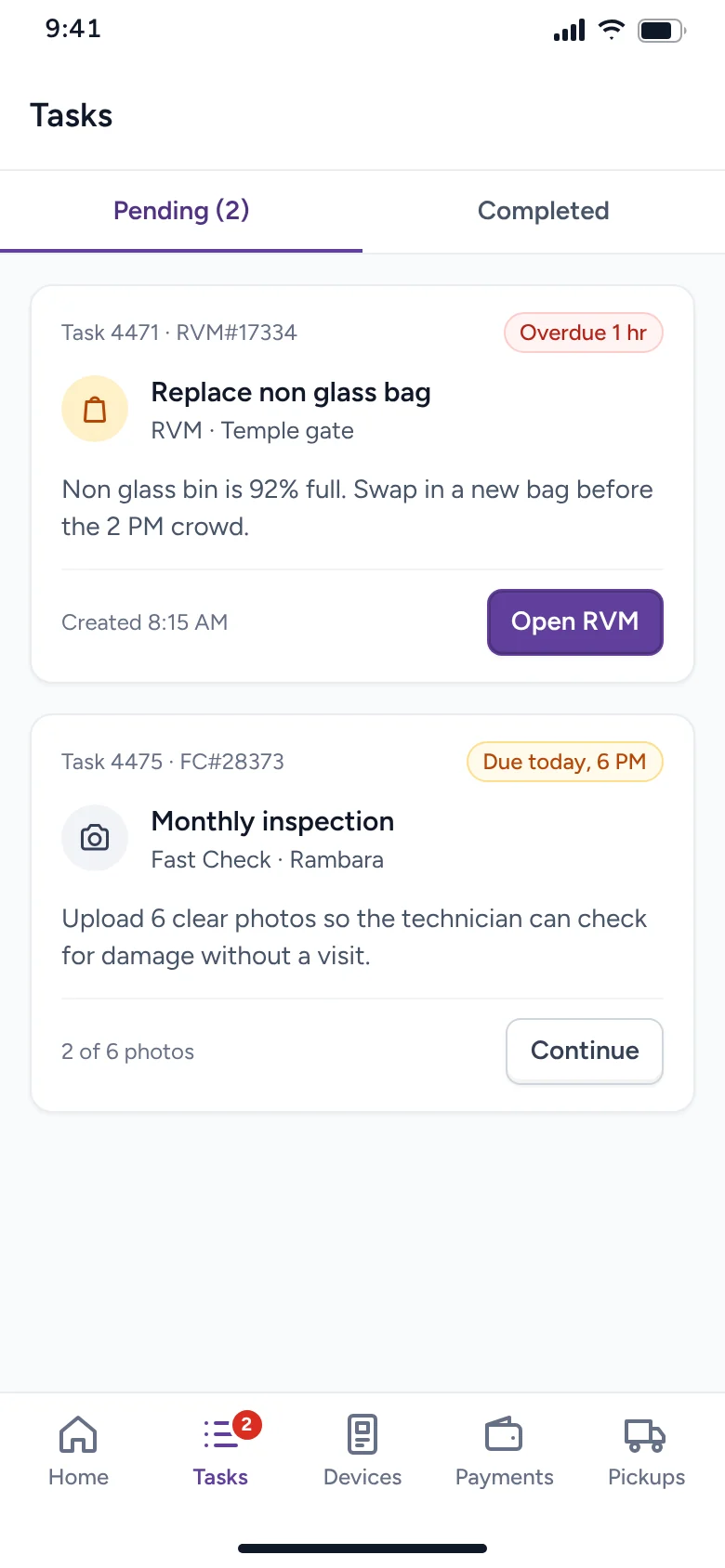
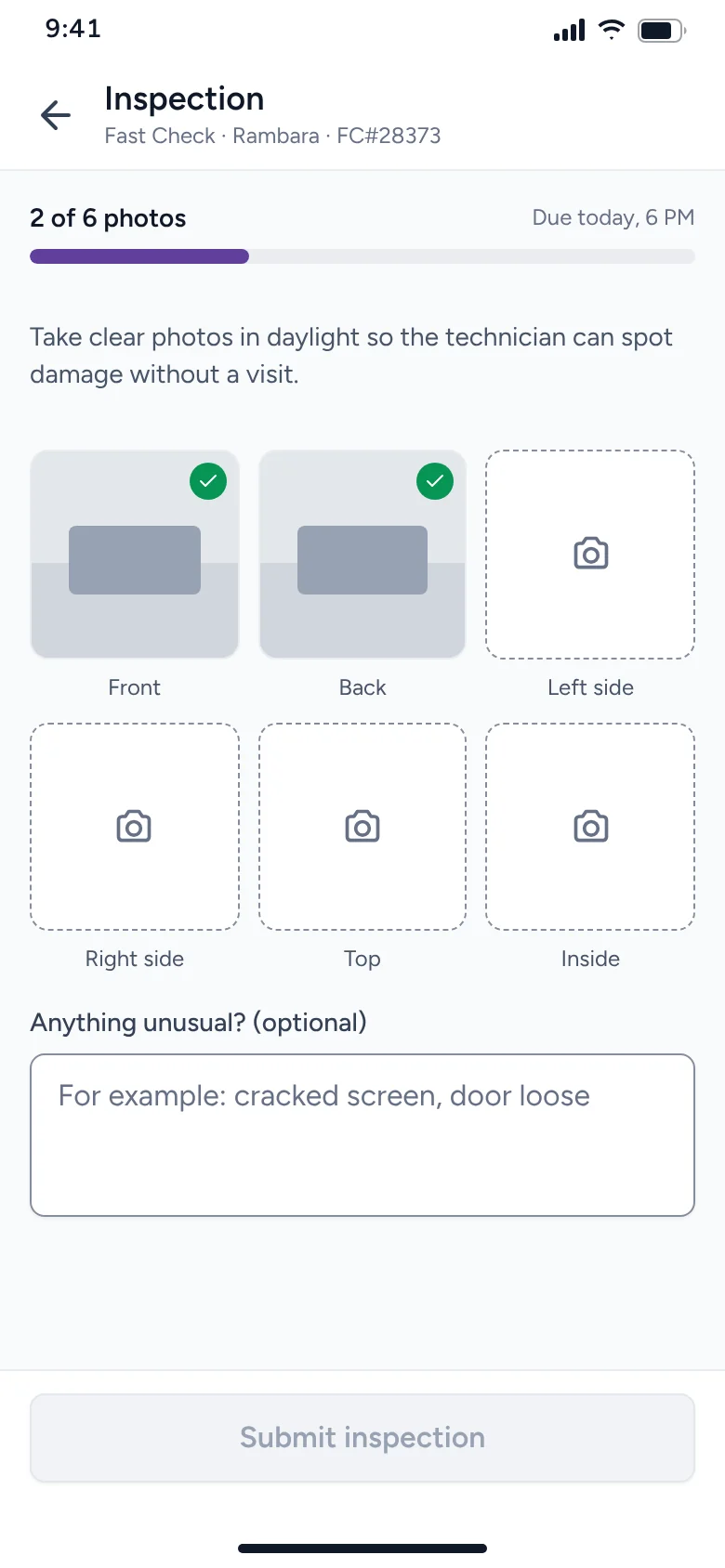
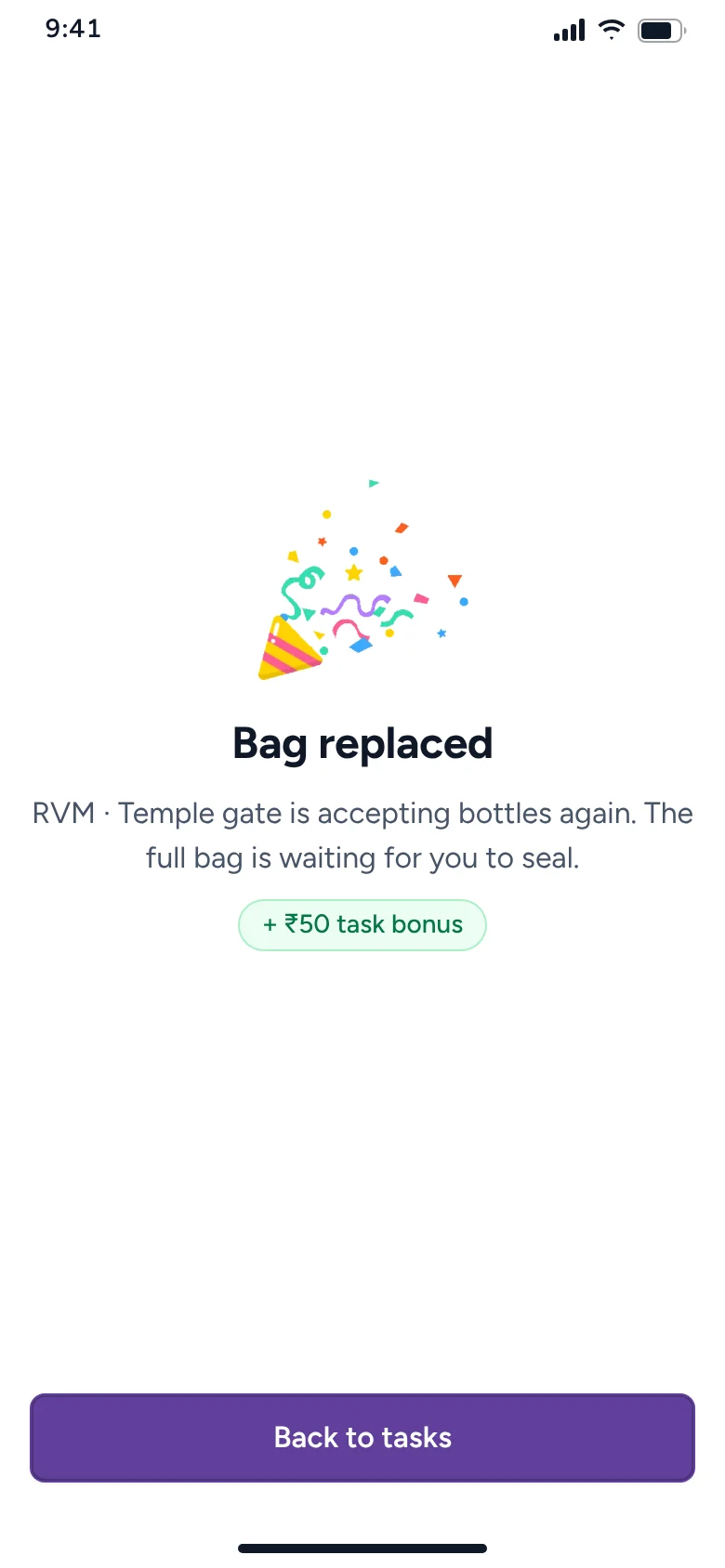
Alerts arrive as tasks with a deadline. The agent opens the RVM with a QR, swaps the bag, and uploads inspection photos for the technician.
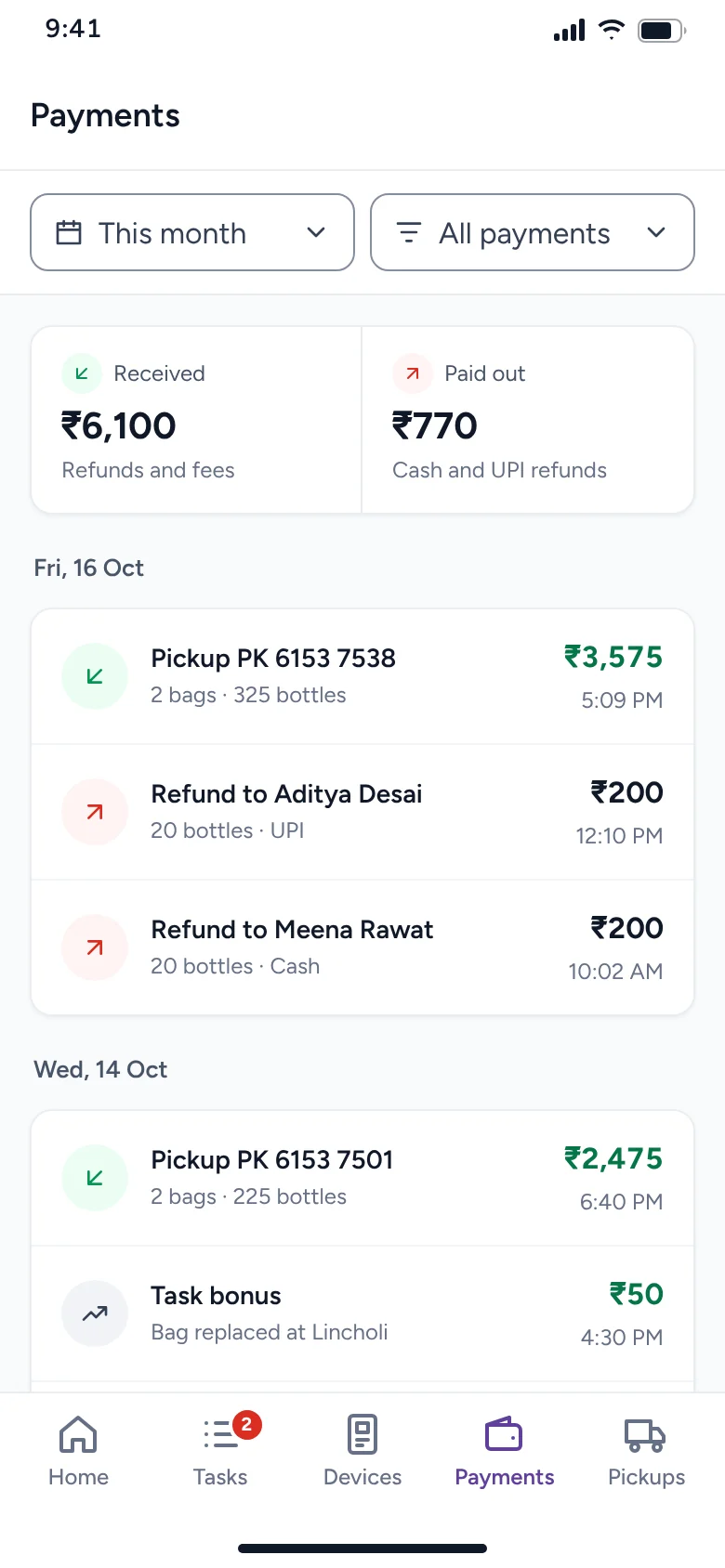
Every rupee in and out, without a calculator.
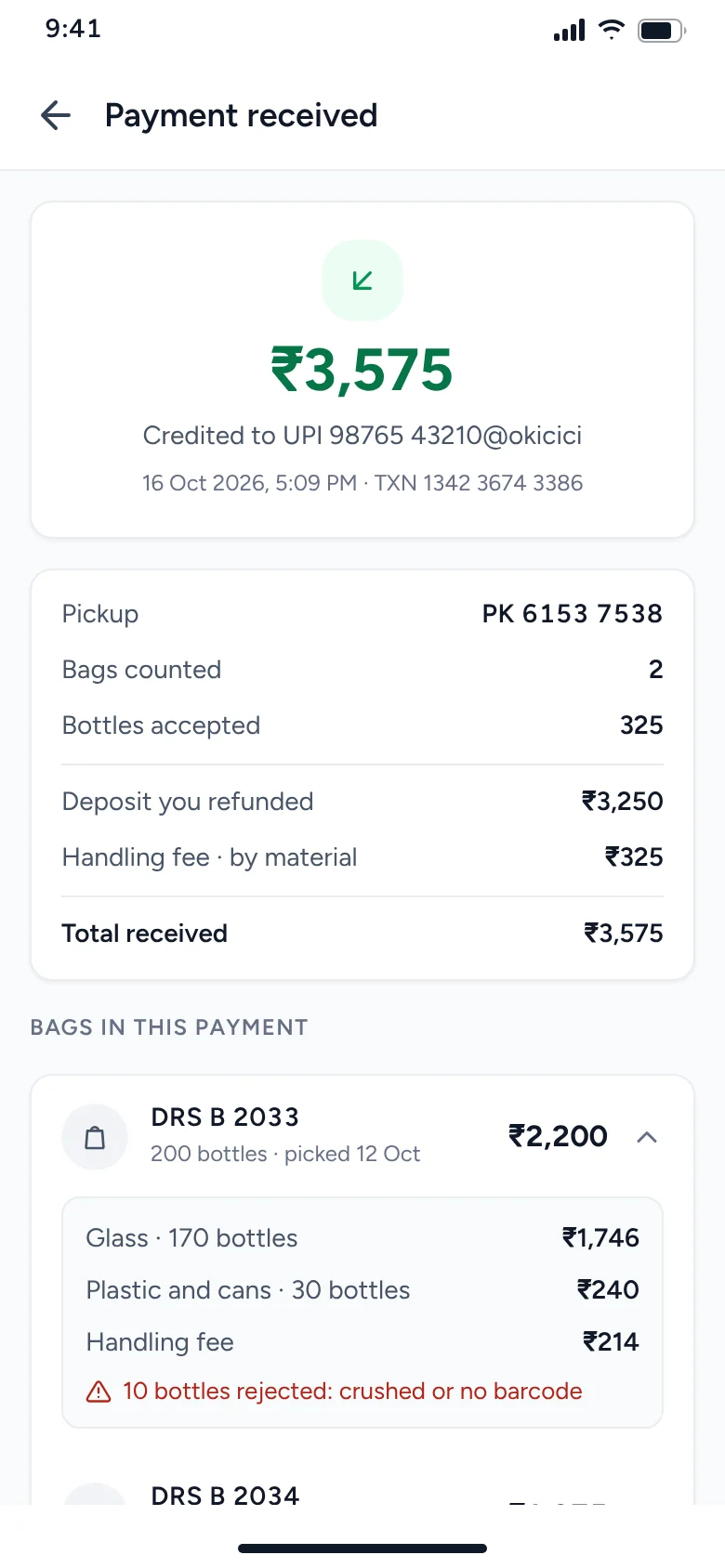
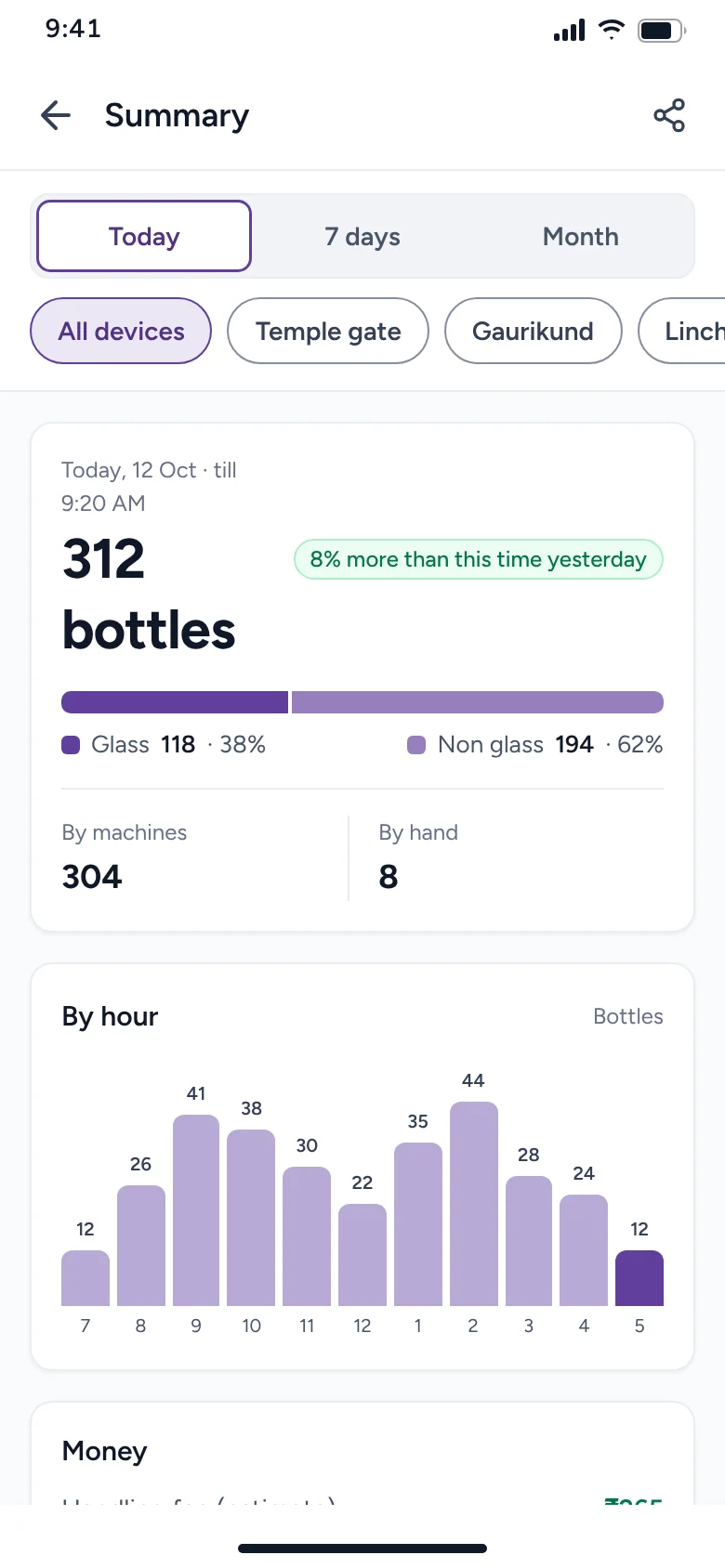
Refunds paid and pickup payouts in one list, with fees by material and a daily summary that replaced the evening register.
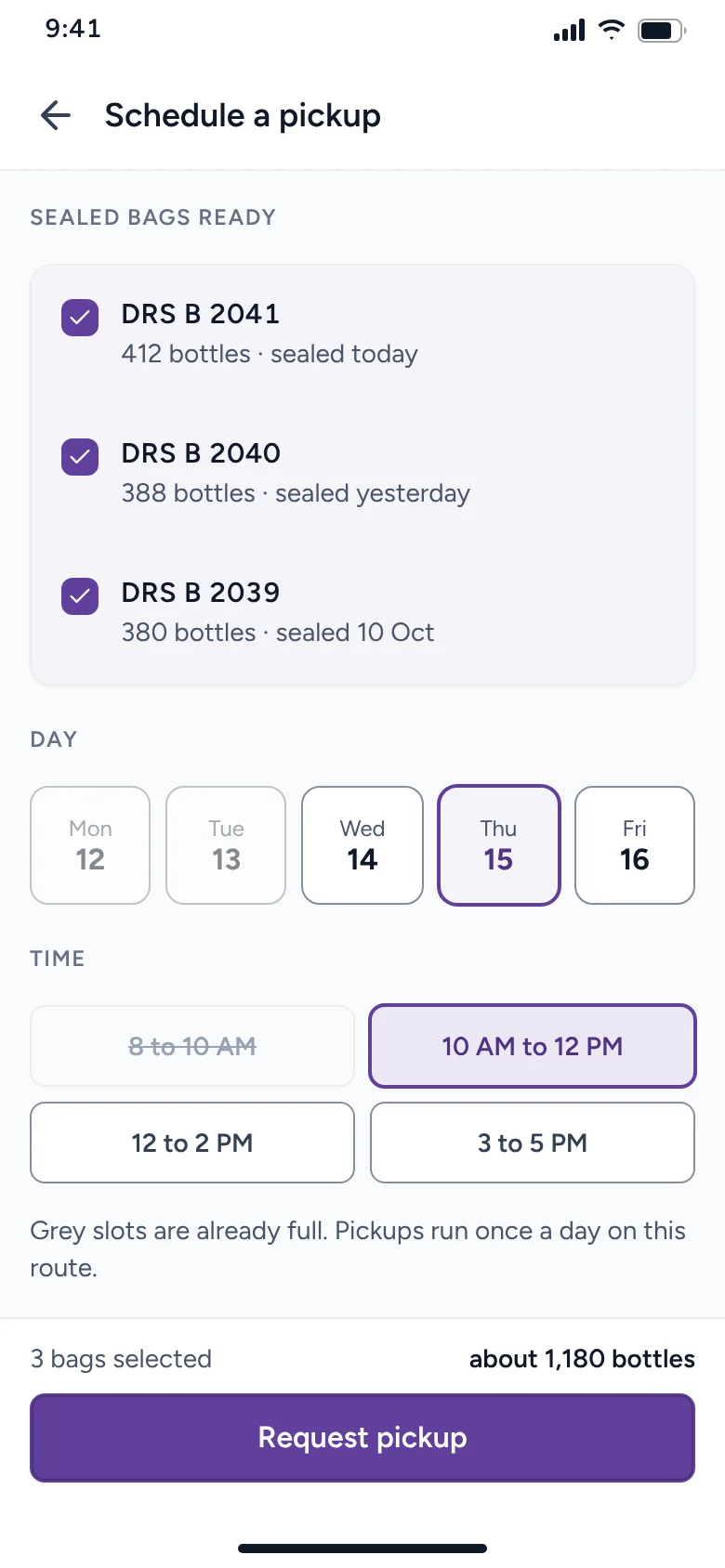
Every bag gets an ID, a life and a picture.
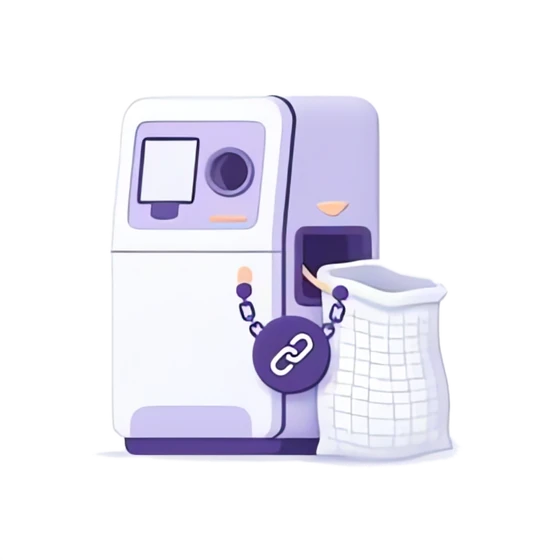
Bags were the most lost object in the system. We gave each stage of a bag's life its own card on Home, with an illustration that shows the job, so a new agent can tell Receive from Seal at a glance.


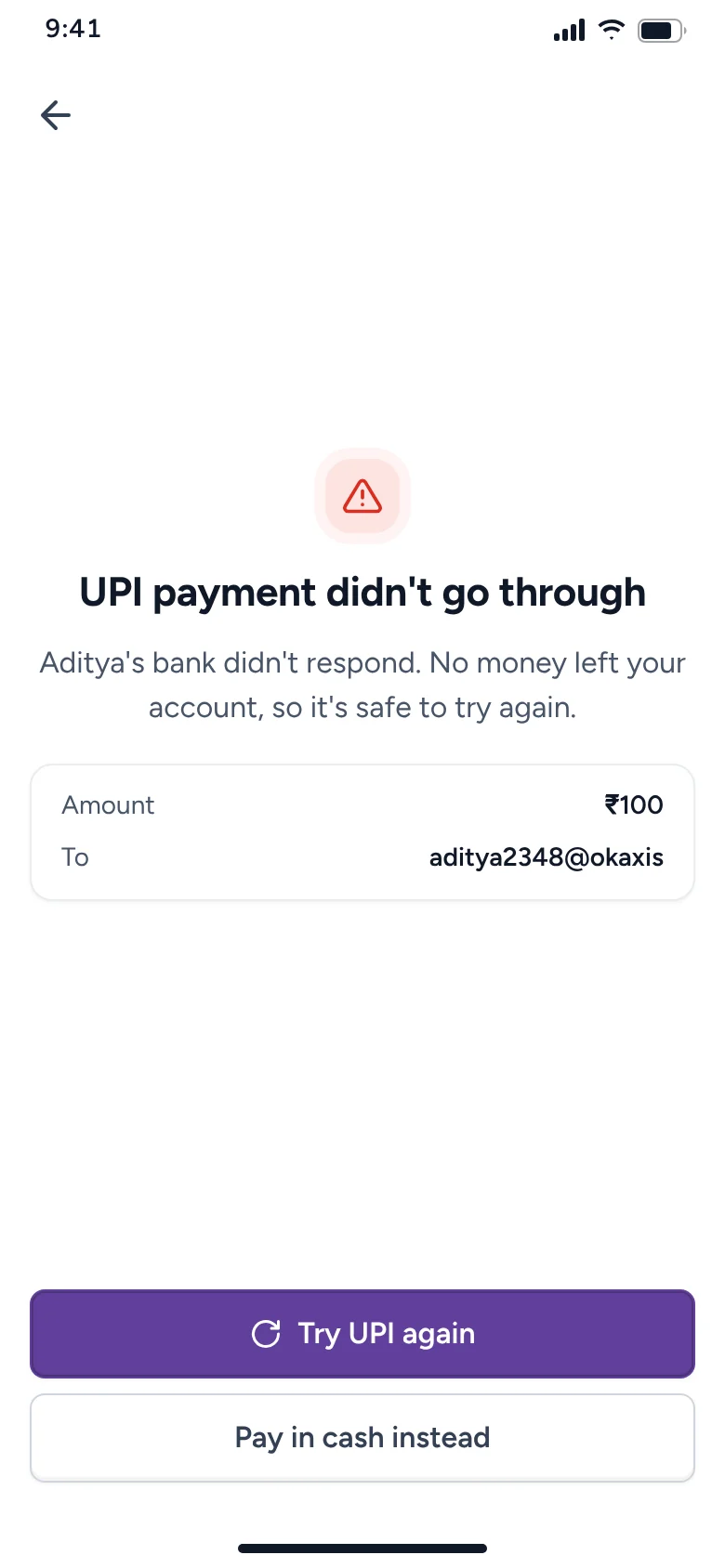
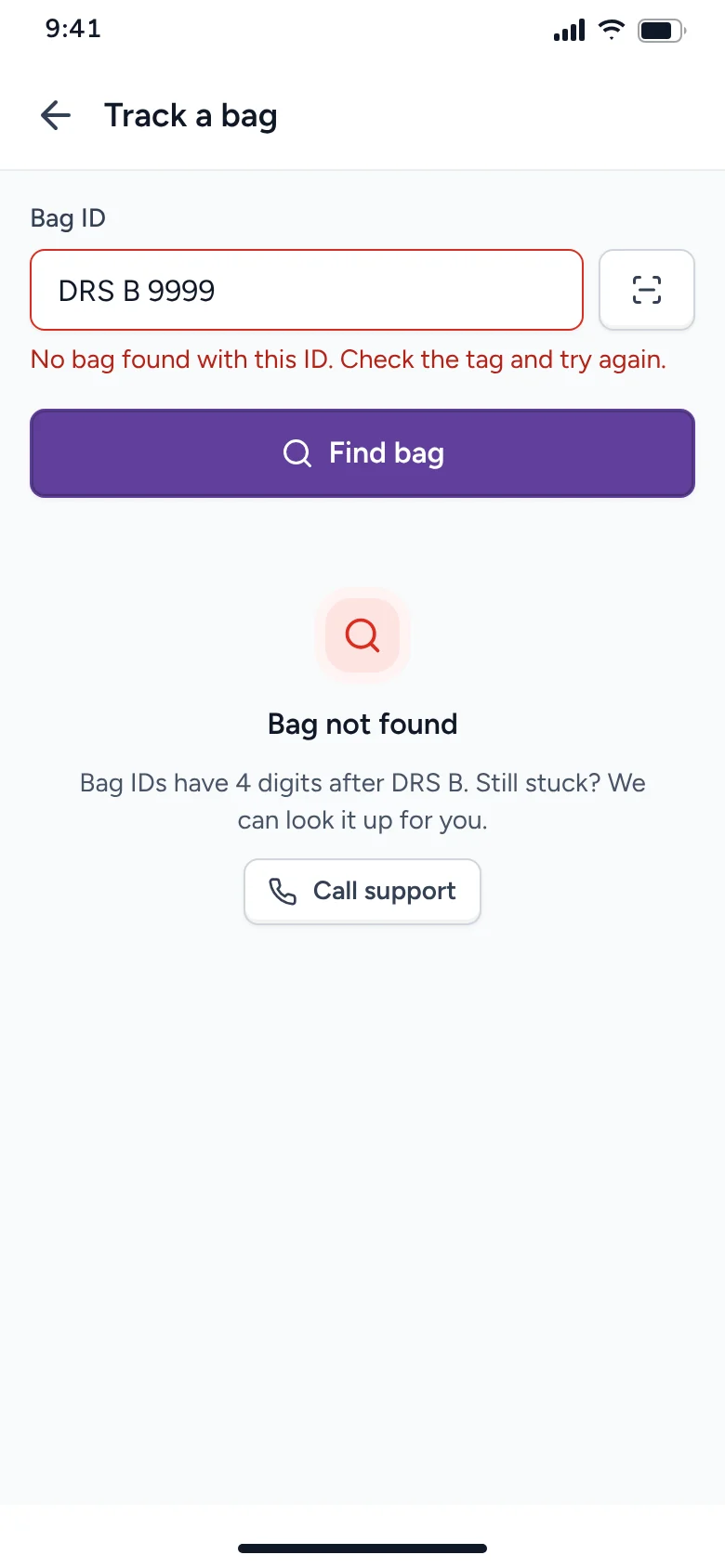
The field is unpredictable. So every screen has a plan B.
No signal, a fake bottle, a failed payout, a dead machine. We designed 40 states so the agent always knows the next move, and the consumer never leaves without their money.
One grape purple, a small set of parts.
Inside the DRS family the consumer app is green, for the public. The agent app needed its own colour for the crew: calm for an eight hour shift, strong enough to mark the one action that matters on each screen. Every screen is built from the parts below.
Agents stopped reconciling. They started collecting.
“Earlier I closed the day with a calculator. Now I close it with one tap, and my bonus is already there.”Abhishek Singh, collection agent, Temple gate